
Japan Property Closing Costs Complete Breakdown

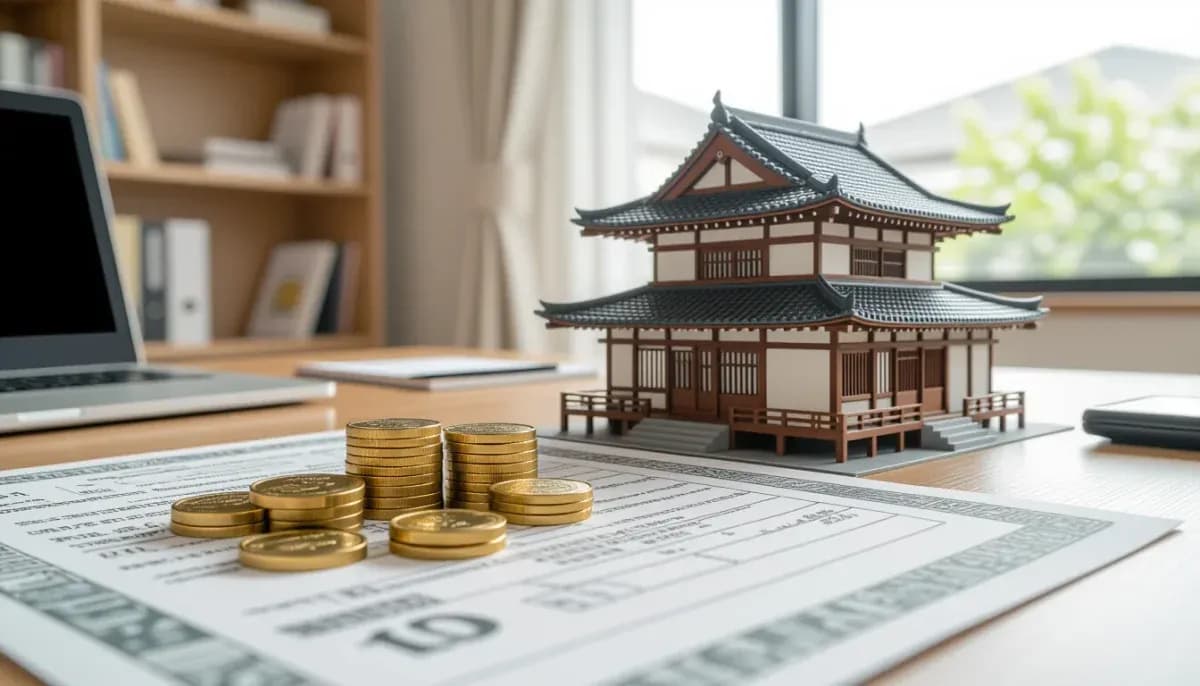
A full breakdown of Japan property closing costs for foreign buyers: agent fees, stamp duty, registration tax, acquisition tax, scrivener fees, and mortgage costs. Budget accurately with our detailed guide.
Japan Property Closing Costs: A Complete Breakdown for Foreign Buyers
Buying property in Japan is an exciting milestone—but the purchase price on the listing is only part of what you'll pay. Japan has a well-defined set of closing costs, taxes, and fees that every buyer must budget for. For foreigners unfamiliar with the Japanese real estate system, these additional costs can come as a surprise. Depending on whether you pay cash or take out a mortgage, expect to add 6–13% on top of the purchase price.
This guide gives you a full, transparent breakdown of every closing cost involved in purchasing property in Japan, from government taxes to professional fees—so you can plan your budget accurately and avoid hidden surprises.
Why Japan's Closing Costs Are Higher Than You Expect
Unlike some countries where closing costs are minimal, Japan has a layered system of taxes, registration fees, and mandatory professional services. These costs are split between government taxes (which are fixed by law) and service fees (which vary by provider and property complexity).
Cash buyers typically pay 4–6% of the purchase price in total closing costs. Mortgage buyers typically pay 5–7% for moderate mortgages, and up to 13% when factoring in all loan-related costs such as guarantee fees and insurance.
The key cost categories are:
- Government taxes (stamp duty, registration tax, acquisition tax)
- Real estate agent commission
- Judicial scrivener fees
- Mortgage-related fees (if applicable)
- Insurance and miscellaneous fees
For a comprehensive look at what owning property in Japan involves beyond the purchase, see our guide on Property Taxes and Annual Costs of Owning Property in Japan.
Real Estate Agent Commission
In Japan, real estate agent fees are legally regulated and cannot exceed a fixed upper limit set by the government. The standard formula is:
3% of purchase price + ¥60,000 + 10% consumption tax
This results in an effective rate of approximately 3.3% of the purchase price plus ¥66,000. Note that in most transactions, the buyer pays this commission—unlike in some countries where the seller bears the full cost.
For example:
- On a ¥30 million property: approximately ¥990,000 + ¥66,000 = ~¥1,056,000
- On a ¥60 million property: approximately ¥1,980,000 + ¥66,000 = ~¥2,046,000
Payment is typically split: half is due when you sign the purchase agreement, and the remaining half at closing (deed transfer).
For foreigners purchasing through English-language agencies, additional fees for translation assistance or international buyer support services may be charged separately, sometimes ¥200,000–¥500,000 extra.
Learn more about the mortgage side of things in our dedicated guide: Mortgages and Home Loans for Foreigners in Japan.
Stamp Duty (印紙税 - Inshi-zei)
Stamp duty is a national tax applied to formal legal documents including the purchase agreement and the loan agreement (if mortgaged). The tax is paid by affixing revenue stamps to the contracts.
The amount varies based on the contract value:
| Contract Value | Standard Stamp Duty | Reduced Rate (for pre-owned homes) |
|---|---|---|
| ¥1M – ¥5M | ¥2,000 | ¥1,000 |
| ¥5M – ¥10M | ¥10,000 | ¥5,000 |
| ¥10M – ¥50M | ¥20,000 | ¥10,000 |
| ¥50M – ¥100M | ¥60,000 | ¥30,000 |
| ¥100M – ¥500M | ¥100,000 | ¥60,000 |
| Over ¥500M | ¥480,000 | ¥160,000 |
For most foreigners buying in the ¥20M–¥100M range, stamp duty is typically ¥10,000–¥60,000—a relatively minor cost but one you need to be aware of.
If you are taking out a mortgage, a second stamp duty applies to the loan agreement (typically ¥20,000 for loans of ¥10M–¥50M).
Registration and License Tax (登録免許税 - Tōroku Menkyo-zei)
This is one of the most significant closing costs. When ownership of a property is transferred to you and recorded in the official land registry, you must pay a registration tax. The same applies when a mortgage lien is registered.
Standard rates (and current reduced rates):
| Registration Type | Standard Rate | Reduced Rate |
|---|---|---|
| Land ownership transfer | 2.0% of assessed value | 1.5% (until March 2027) |
| Building ownership transfer | 2.0% of assessed value | 0.3% (primary residence, built after 1982) |
| Mortgage registration | 0.4% of loan amount | 0.1% (primary residence) |
Important: These rates apply to the government-assessed value (kōjō kijun chi for land, kōtei shisan hyōka-gaku for buildings), which is typically 60–80% of the market price. This means the actual tax burden is somewhat lower than it appears.
The judicial scrivener (see below) handles the registration process and collects these taxes on your behalf.
Real Estate Acquisition Tax (不動産取得税 - Fudōsan Shutoku-zei)
This is a one-time prefectural tax levied when you acquire real estate. It is billed 6 to 18 months after the property purchase is finalized—which catches many first-time buyers off guard since they assume all costs are paid at closing.
Current rates (until March 31, 2027):
- Land: 3% of assessed value
- Residential buildings: 3% of assessed value
- Commercial/non-residential buildings: 4% of assessed value
Significant reductions are available for residential properties meeting these criteria:
- Built after January 1, 1982 (or meets current seismic standards)
- Floor area between 50m² and 240m²
For new construction, additional deductions may reduce the taxable building value by up to ¥12 million.
For many foreigners buying a standard residential property, the actual acquisition tax owed after deductions may be surprisingly low—or even zero. However, this must be confirmed with your judicial scrivener or tax advisor.
See our full guide on Legal Procedures and Documentation for Japan Property Purchase to understand the entire acquisition process.
Judicial Scrivener Fees (司法書士 - Shihō Shoshi)
In Japan, a licensed judicial scrivener (shihō shoshi) is required to handle the formal transfer of property ownership in the land registry. This professional verifies the seller's identity, prepares all registration documents, and files them with the Legal Affairs Bureau on your behalf.
Typical fees:
- Simple ownership transfer (no mortgage): ¥50,000–¥100,000
- With mortgage registration: ¥80,000–¥200,000
- Complex transactions (multiple titles, trust structures): ¥200,000+
The judicial scrivener also collects the registration taxes described above and remits them to the government. When you receive a fee breakdown from your scrivener, make sure you distinguish between the scrivener's professional fee and the government tax amounts.
For foreign buyers who need additional documentation support—such as certified translations or notarized power-of-attorney documents—expect additional charges of ¥30,000–¥100,000.
For comprehensive guidance on buying property in Japan as a foreigner, visit Living in Nihon's property and mortgage guide for foreigners which covers many aspects of the process in detail.
Mortgage-Related Closing Costs
If you're financing your purchase with a mortgage, several additional fees apply:
Loan origination / handling fee (事務手数料): Typically a flat fee of ¥50,000–¥110,000 or a percentage-based fee of around 2.2% of the loan amount (including consumption tax). Flat-fee mortgages are increasingly common and may save money on larger loans.
Mortgage guarantee fee (保証料 - Hoshō-ryō): This fee goes to a guarantee company that covers the lender if you default. It is typically 2–3% of the loan amount, though some lenders include this as part of the interest rate (0.2–0.5% higher APR) rather than as an upfront fee.
Fire insurance (火災保険): Required by all Japanese lenders. Typical cost: ¥100,000–¥500,000 for a 5–10 year policy. The exact amount depends on property type, age, and coverage level.
Group credit life insurance (団体信用生命保険 - Dan-shin): Most Japanese mortgages include this as a condition of borrowing. Premium costs are often built into the interest rate (approximately 0.3% extra APR) rather than charged separately.
Non-permanent residents face additional challenges: Many Japanese lenders require a 30% or greater down payment for buyers without permanent residence status, compared to 10–20% for permanent residents. Some lenders also charge higher interest rates (0.5–1% above standard) for non-resident borrowers. For guidance on navigating mortgages as a foreigner, see Gaijin Buy House's guide to mortgage application documents.
Property Tax Proration at Closing
When you buy a property mid-year, you typically reimburse the seller for the portion of annual property taxes (koteishisan-zei) and city planning taxes (toshi-keikaku-zei) covering the months you'll own the property. This is done at closing and is based on the seller's annual tax bill.
For a property with annual taxes of ¥200,000, buying on July 1 means you'd owe approximately ¥100,000 to the seller as a proration adjustment.
This is not technically a "cost" since you're paying taxes you would owe anyway—but it does appear as a line item on your settlement sheet and requires upfront cash.
Tax Agent Requirement for Non-Residents
If you do not reside in Japan after purchasing your property, you are legally required to appoint a tax agent (納税管理人 - nōzei kanri-nin). This person acts as your official representative for tax purposes, receiving tax notices and managing payment procedures with local municipal offices.
Tax agent services are available through:
- Real estate management companies
- Judicial scriveners
- Tax accountants (zeirishi)
Typical fees: ¥30,000–¥120,000 per year depending on scope of services.
This is a mandatory legal requirement, not optional—failing to appoint a tax agent can result in penalties or complications when you eventually sell.
For more on visa and residency considerations that affect your tax status when buying in Japan, see our guide on Visa and Residency Considerations for Property Buyers in Japan.
Complete Closing Cost Summary Table
Here's a consolidated view of all closing costs for a typical ¥40 million property purchase with a ¥32 million mortgage (80% LTV, primary residence by a foreigner with permanent residency):
| Cost Item | Estimated Amount | Notes |
|---|---|---|
| Real estate agent commission | ~¥1,386,000 | 3.3% of ¥42M + ¥66,000 |
| Stamp duty (purchase agreement) | ¥10,000 | Reduced rate for pre-owned |
| Stamp duty (loan agreement) | ¥20,000 | ¥32M loan |
| Registration tax (land) | ~¥360,000 | 1.5% of assessed land value |
| Registration tax (building) | ~¥60,000 | 0.3% reduced rate |
| Mortgage registration tax | ~¥32,000 | 0.1% of ¥32M loan |
| Real estate acquisition tax | ~¥0–200,000 | Often zero after deductions |
| Judicial scrivener fees | ~¥150,000 | Including mortgage registration |
| Mortgage handling fee | ~¥110,000 | Flat fee option |
| Mortgage guarantee fee | ~¥640,000 | 2% of loan (if charged upfront) |
| Fire insurance (5 years) | ~¥150,000 | Varies by property |
| Property tax proration | ~¥100,000 | Mid-year purchase |
| Total estimated closing costs | ~¥3,018,000 | ~7.5% of purchase price |
Note: This is an illustrative estimate. Actual costs vary significantly by property, lender, and buyer circumstances. Always request a detailed cost breakdown from your real estate agent and judicial scrivener before signing.
Tips for Minimizing Closing Costs
1. Choose flat-fee mortgage origination: On larger loans, a flat ¥110,000 origination fee beats a 2.2% percentage-based fee significantly.
2. Buy a property built after 1982: Pre-owned properties meeting seismic standards qualify for reduced registration taxes and acquisition tax deductions.
3. Establish primary residence: If you live in the property, you qualify for reduced registration taxes and acquisition tax deductions versus buying as an investment.
4. Compare judicial scriveners: Fees are not fixed, so getting two or three quotes is worthwhile—especially for complex transactions.
5. Get a full cost breakdown early: Before signing any agreement, ask your agent for an itemized estimate of all closing costs. Reputable agents provide this proactively.
For a broader overview of all costs involved in buying property in Japan, including hidden fees many buyers miss, see our dedicated guide on Hidden Costs and Fees When Buying Property in Japan.
For a complete picture of the Japanese housing market for foreign buyers, the For Work in Japan housing and living guide for foreigners provides useful context on accommodation and living infrastructure.
For additional reference, realestate.co.jp's breakdown of purchase fees and taxes and Housing Japan's 2025 property tax guide are excellent resources with up-to-date figures.
Conclusion
Japan's property closing costs are higher than many buyers initially realize, but they are predictable and transparent once you understand the system. Budget 6–13% above the purchase price depending on your financing situation, and make sure to account for the real estate acquisition tax that arrives months after closing.
Working with an experienced real estate agent and a qualified judicial scrivener—ideally ones who have experience with foreign buyers—will ensure you get accurate cost estimates and avoid surprises. For a complete overview of the entire buying process, start with our Complete Guide to Buying Property in Japan as a Foreigner.

Originally from Vietnam, living in Japan for 16+ years. Graduated from Nagoya University, with 11 years of professional experience at Japanese and international companies. Sharing information about buying property in Japan for foreigners.
View Profile →Related Articles

Common Delays in Japan Property Purchase and How to Avoid Them
Discover the 7 most common causes of delays when buying property in Japan as a foreigner — from mortgage rejections to unregistered buildings — and practical steps to avoid them.
Read more →
Using Power of Attorney for Japan Property Purchase
Learn how to use power of attorney (委任状) to buy property in Japan as a foreign non-resident buyer. Covers POA types, notarization, apostille, costs, and who can represent you.
Read more →
Hanko Seal Requirements for Property Purchase in Japan
Learn everything about hanko seal requirements for buying property in Japan as a foreigner. Covers jitsuin registration, Inkan Shomeisho, non-resident alternatives, and the 2022 digital reform.
Read more →
Property Registration (Touki) in Japan Explained
Learn how Japan's touki property registration system works, including process steps, costs, required documents, and special rules for foreign buyers. Updated for 2025-2026.
Read more →
Closing and Settlement Process in Japan Real Estate
Complete guide to closing and settlement in Japan real estate for foreign buyers. Learn what happens on closing day, required documents, costs (6-10%), judicial scrivener role, and post-closing obligations.
Read more →
Property Inspection and Building Survey in Japan
Learn everything about property inspection and building surveys in Japan for foreigners. Costs, qualified inspectors, what to check, and how to use findings to negotiate your purchase.
Read more →