
Japan Inheritance Tax on Property: Rates and Rules Explained

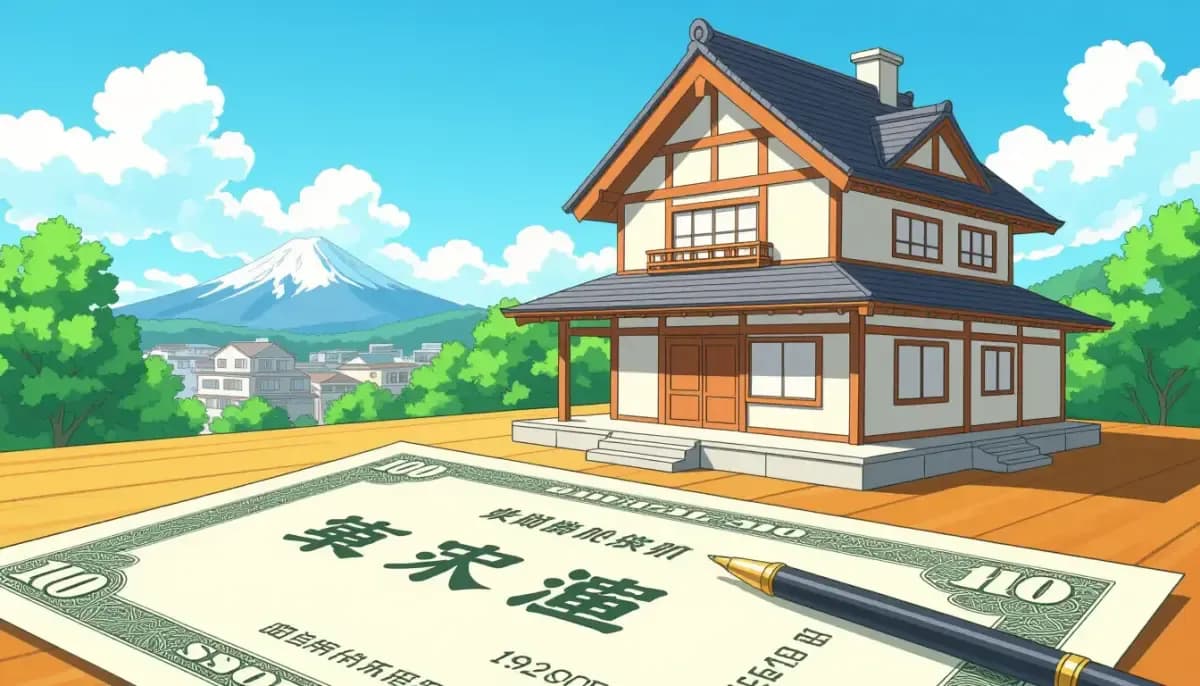
Japan inheritance tax rates reach 55% on property. Learn how foreigners are taxed, property valuation discounts, key exemptions, and how to file within the 10-month deadline.
Japan Inheritance Tax on Property: Rates and Rules Explained
Inheriting property in Japan—or leaving Japanese real estate to loved ones—comes with one of the world's highest inheritance tax burdens. Japan's top rate of 55% is the steepest globally, and the rules can catch foreign residents off guard. Whether you are an expat who owns a home in Tokyo, a permanent resident planning your estate, or a family member abroad who has just inherited Japanese property, understanding how this tax works is essential.
This guide breaks down Japan's inheritance tax rates, property valuation rules, exemptions, and what foreigners specifically need to know to navigate the process without costly surprises.
How Japan's Inheritance Tax Works
Unlike many countries that tax the estate itself, Japan taxes each heir individually based on their share of the inheritance. This distinction matters because the calculation uses "statutory shares"—legal proportions assigned by the Civil Code—rather than what the heir actually receives.
The process is:
- Calculate the total taxable estate (gross assets minus debts and funeral costs)
- Subtract the basic exemption (see below)
- Divide the remainder using statutory shares
- Apply the tax rate to each heir's share
- Add the tax amounts together to get the total inheritance tax
- Apportion the total among heirs based on what they actually received
All heirs typically file one combined return within 10 months of the date of death. Missing this deadline results in penalties and loss of certain exemptions.
For a deeper understanding of how property ownership interacts with inheritance planning, see our guide on Inheritance and Estate Planning for Property in Japan.
Japan Inheritance Tax Rates and Brackets
Japan uses a progressive tax structure. The rates below apply to each heir's notional statutory share of the taxable estate after the basic exemption is subtracted.
| Taxable Amount per Heir | Tax Rate | Deduction |
|---|---|---|
| Up to ¥10 million | 10% | ¥0 |
| ¥10M – ¥30M | 15% | ¥500,000 |
| ¥30M – ¥50M | 20% | ¥2,000,000 |
| ¥50M – ¥100M | 30% | ¥7,000,000 |
| ¥100M – ¥200M | 40% | ¥17,000,000 |
| ¥200M – ¥300M | 45% | ¥27,000,000 |
| ¥300M – ¥600M | 50% | ¥42,000,000 |
| Over ¥600M | 55% | ¥72,000,000 |
The top rate of 55% only applies to the highest slice of large estates. Effective rates are often much lower because of the basic exemption, the way the tax is split among heirs, and available deductions. In fact, less than 10% of all estates in Japan actually end up owing any inheritance tax at all.
The Basic Exemption: How Much Is Tax-Free?
Every estate benefits from a basic exemption calculated as:
¥30,000,000 + (¥6,000,000 × number of statutory heirs)
Examples:
- 1 statutory heir (one child, no spouse): ¥30M + ¥6M = ¥36 million tax-free
- 2 statutory heirs (spouse + 1 child): ¥30M + ¥12M = ¥42 million tax-free
- 4 statutory heirs (spouse + 3 children): ¥30M + ¥24M = ¥54 million tax-free
If the total taxable estate is below this threshold, there is no filing requirement and no tax owed. This exemption is why the majority of Japanese estates never trigger inheritance tax.
For more on the costs associated with owning property in Japan, visit Property Taxes and Annual Costs of Owning Property in Japan.
How Japanese Property Is Valued for Inheritance Tax
Real estate receives significant valuation discounts compared to its market price, which is one of the main reasons Japanese property is considered a valuable estate planning tool.
Land valuation (rosenka method): The National Tax Agency publishes annual roadside land prices (路線価, rosenka) every July 1st. These values are typically about 80% of fair market value, providing an automatic 20% discount for inheritance tax purposes.
Building valuation: Structures are assessed at their property tax assessment value, which is roughly 70% of replacement cost—meaning the actual taxable value is already discounted before any other reductions apply.
Rental property bonus: Properties rented out to tenants receive additional discounts because having tenants is treated as a "usage restriction" that limits the owner's control. A fully tenanted apartment building may be valued at a fraction of its sale price for inheritance tax purposes. This is the basis of the so-called "condo tax loophole" that Japan is proposing to reform in 2026.
Important 2026 reform: Japan has proposed shifting property inheritance valuations away from the rosenka system to a calculation based on the original purchase price adjusted for land price movements. This would eliminate much of the discount currently available for condominium properties. If you own or plan to own Japanese real estate, tracking this reform is critical.
For detailed guidance on buying and owning condominiums, see Buying a Condominium (Mansion) in Japan as a Foreigner.
Key Deductions and Exemptions
Several deductions can significantly reduce the inheritance tax bill:
Spousal tax credit: The surviving spouse pays no inheritance tax on amounts up to the greater of:
- Their legal statutory share (typically 50% of the estate), or
- ¥160 million
This is one of the most generous credits in the Japanese tax code. However, any assets the spouse subsequently leaves to the next generation will be subject to inheritance tax, so some planning is still warranted.
Life insurance and retirement allowances: Each statutory heir can exclude up to ¥5 million in life insurance proceeds and ¥5 million in retirement allowances from the taxable estate.
Debts and mortgages: Outstanding mortgage balances, loans, and funeral costs are deducted from the gross estate before tax is calculated. A property with a large mortgage could have a very low or even negative net taxable value.
Small residential land deduction (小規模宅地等の特例): Land used as the primary residence may qualify for up to an 80% reduction in assessed land value if certain conditions are met—typically that an heir continues to live in the property. This is one of the most impactful deductions for residential real estate.
Foreign tax credit: If inheritance tax is paid in another country on the same assets, a credit may be available to reduce Japanese inheritance tax and avoid double taxation.
Learn more about the legal framework governing property ownership in our article on Legal Procedures and Documentation for Japan Property Purchase.
Rules for Foreigners: Who Has to Pay?
Japan's inheritance tax applies to residents and certain non-residents, depending on visa type and length of stay. The rules changed significantly in 2017 and again in 2019, tightening the net for long-term foreign residents.
Table 1 Visa Holders (Work Visas, Student Visas, etc.)
Foreigners on "Table 1" visas—including most work, student, and temporary visas—are only taxed on Japanese domestic assets if they have lived in Japan for fewer than 10 of the past 15 years.
Once a Table 1 visa holder crosses the 10-year residency threshold, their entire global estate becomes subject to Japanese inheritance tax, both as a decedent and as an heir.
Table 2 Visa Holders (Permanent Residents, Long-Term Residents, Spouses/Children of Japanese Nationals)
Foreigners with "Table 2" visas—including permanent residents, long-term residents, and spouses or children of Japanese nationals or permanent residents—are treated essentially the same as Japanese citizens. Their worldwide assets are taxable, regardless of how long they have lived in Japan.
Non-Residents
A foreign heir who does not live in Japan typically only owes Japanese inheritance tax on Japan-situs assets (property located in Japan). However, if the deceased was a Japanese resident, the heir may be responsible for tax on the full Japanese estate even from abroad.
Former Residents
Former residents who left Japan within the past 5 years may still have their worldwide assets subject to Japanese inheritance tax in certain cases.
For more on how residency status affects your rights as a property owner, read Visa and Residency Considerations for Property Buyers in Japan.
| Situation | Assets Subject to Tax |
|---|---|
| Table 2 visa holder (heir or decedent) | Worldwide assets |
| Table 1 visa holder, under 10 years in Japan | Japan-situs assets only |
| Table 1 visa holder, over 10 years in Japan | Worldwide assets |
| Non-resident heir (resident decedent) | Japan-situs assets |
| Former resident (left within 5 years) | Worldwide assets (in some cases) |
For additional context on the international tax angle, the team at Living in Nihon has a detailed guide on international inheritance basics covering how the process works when multiple countries are involved.
The Gift Tax Connection: 7-Year Clawback Rule
In Japan, gift tax and inheritance tax are linked. Gifts made within 7 years before death are added back into the taxable inheritance. This prevents people from rapidly gifting away assets on their deathbed to avoid inheritance tax.
However, there is an annual gift tax exemption of ¥1.1 million per recipient per year. Gifts within this limit do not need to be reported and are not clawed back into the inheritance. Systematic annual gifting over many years is therefore a legitimate and widely used planning strategy.
There is also a "settlement tax system" (相続時精算課税) that allows larger lifetime gifts to be made with a special exemption (¥25 million lifetime) at a flat 20% gift tax rate, with the gifts credited against inheritance tax at death. This can be beneficial for passing appreciating assets to the next generation.
If you are considering whether to hold, sell, or gift your Japanese property, the For Work in Japan tax guide for foreigners provides useful background on how Japan's tax system treats foreign residents.
How to File: Practical Steps for Heirs
When you inherit Japanese property or other assets, here is the general process:
- Confirm heirs and assets – Identify all statutory heirs and compile an asset inventory including all property, bank accounts, securities, and other assets.
- Obtain a Japanese family register (koseki) – Required to prove kinship. For foreign heirs, equivalent documents from the home country may need to be apostilled and translated.
- Have the property appraised – While the tax office uses rosenka and assessed values, obtaining a professional appraisal can be useful for planning purposes.
- Consult a Japanese tax accountant (zeirishi) – Given the complexity and the 10-month deadline, professional guidance is strongly recommended, especially for international estates.
- File the inheritance tax return – Submit a combined return listing all assets, deductions, and the tax allocation among heirs.
- Pay the tax – Payment is due at the same time as the return. Installment payment (延納) is available in certain cases, and payment in kind (物納) using property itself is possible under strict conditions.
For foreigners unfamiliar with Japanese bureaucracy, working with a bilingual tax professional is invaluable. The Gaijin Buy House guide to property decisions when leaving Japan also covers relevant decisions around what to do with Japanese real estate as circumstances change.
Estate Planning Strategies for Foreign Property Owners
Planning ahead can dramatically reduce the inheritance tax burden on your estate:
Hold property with a mortgage: Borrowing against your property increases deductible debt and lowers the net taxable value. This is why many estate planners in Japan recommend mortgaged investment properties as a tax-efficient way to pass wealth.
Use annual gift allowances: Gifting ¥1.1 million per year per recipient is tax-free and accumulates meaningfully over time. A couple with three children could transfer ¥6.6 million annually with no gift tax.
Utilize the spousal credit: The ¥160 million spousal exemption is powerful, but assets passed to a spouse will eventually be inherited again by children—often with less favorable terms.
Consider the small residential land deduction: If an heir will continue to live in your Japanese home, the 80% deduction on residential land is one of the biggest tax breaks available and should factor heavily into your planning.
Seek treaty protection: Japan has tax treaties with a number of countries that may provide relief from double taxation on inherited assets. The US-Japan estate tax treaty, for example, offers protections for American citizens.
For broader investment planning in Japanese real estate, see our Japan Real Estate Investment Guide for Foreigners.
Common Questions About Japan Inheritance Tax
Can a foreigner inherit Japanese property without living in Japan? Yes. Non-resident heirs can inherit Japanese property. They will owe Japanese inheritance tax on Japan-situs assets, and they may need to appoint a tax representative in Japan (税務代理人) to handle the filing.
Is Japanese inheritance tax the same as US estate tax? No. Japan taxes each heir on their share; the US taxes the estate directly. The US-Japan estate tax treaty coordinates which country has primary taxing rights to prevent double taxation for Americans.
What happens if the estate cannot pay the tax? Heirs who cannot pay in cash may apply for installment payments or, in limited cases, pay in kind using the inherited property itself (物納). These options require advance approval from the tax office.
Does owning property through a company avoid inheritance tax? Shares in a foreign company holding Japanese property may not be considered a Japan-situs asset, potentially removing the property from Japan's inheritance tax reach. However, this is a complex area and rules have changed; professional advice is essential before using corporate structures for estate planning purposes.
What is the deadline if I live overseas? Non-resident heirs get an extended deadline: 10 months from the date of death still applies, but the clock runs from the moment the heir learns of the inheritance if they are abroad. Working with a local tax representative is strongly advisable to track this deadline.
For more guidance on the full process of owning property in Japan as a foreigner, start with our Complete Guide to Buying Property in Japan as a Foreigner.
Final Thoughts
Japan's inheritance tax is complex, internationally reaching, and potentially very costly—but it is also full of legitimate deductions and planning opportunities that can substantially reduce your liability. For foreign residents and property owners, the key variables are your visa type, length of stay, and where your assets are located. Understanding these factors early gives you the best chance to plan effectively.
The 10-month filing deadline leaves little room for delays when a death occurs, so building your knowledge now—and establishing relationships with qualified Japanese tax professionals—is the most valuable thing you can do before you need to navigate this process.
For further reading on the financial aspects of property ownership in Japan, our guide on Hidden Costs and Fees When Buying Property in Japan covers the full financial picture from purchase through ownership and eventual transfer.
For comprehensive data on Japan's inheritance tax structure, PwC's Japan Individual Tax Summary and Leo Wealth's Overview of Japan's Inheritance Tax for Foreigners are excellent reference points.

Originally from Vietnam, living in Japan for 16+ years. Graduated from Nagoya University, with 11 years of professional experience at Japanese and international companies. Sharing information about buying property in Japan for foreigners.
View Profile →Related Articles

Foreign Heir Inheriting Japan Property: Complete Process Guide
Complete guide for foreign heirs inheriting Japan property: legal process, required documents, inheritance tax rules, mandatory 2024 registration law, and step-by-step instructions for overseas heirs.
Read more →
Inheritance Tax Exemptions and Deductions for Japan Property
Complete guide to inheritance tax exemptions and deductions for Japan property owners. Learn about the basic exemption, spousal credit, property valuation discounts, and rules for foreign nationals.
Read more →
Japan Property Succession Through Family Trust
Learn how Japan's family trust (民事信託) protects your property from dementia and simplifies inheritance. A complete guide for foreign property owners on succession planning, tax implications, and setup steps.
Read more →
Japan Inheritance Tax Payment Methods and Deadlines
Learn about Japan inheritance tax payment methods including lump-sum, installment (延納), and in-kind (物納) options. Understand the strict 10-month deadline, penalties for late payment, and special rules for foreign nationals and non-residents.
Read more →
How to Calculate Japan Inheritance Tax on Property
Learn exactly how to calculate Japan inheritance tax on property step by step — from basic deductions and Rosenka valuations to progressive tax rates and credits for foreign heirs.
Read more →
Trust Structures for Japan Property Management and Succession
Learn how to use trust structures (kazoku shintaku) in Japan to manage and pass on property as a foreigner. Covers family trusts, inheritance tax, 2024 law changes, and setup steps.
Read more →