
Japan Property Succession Through Family Trust

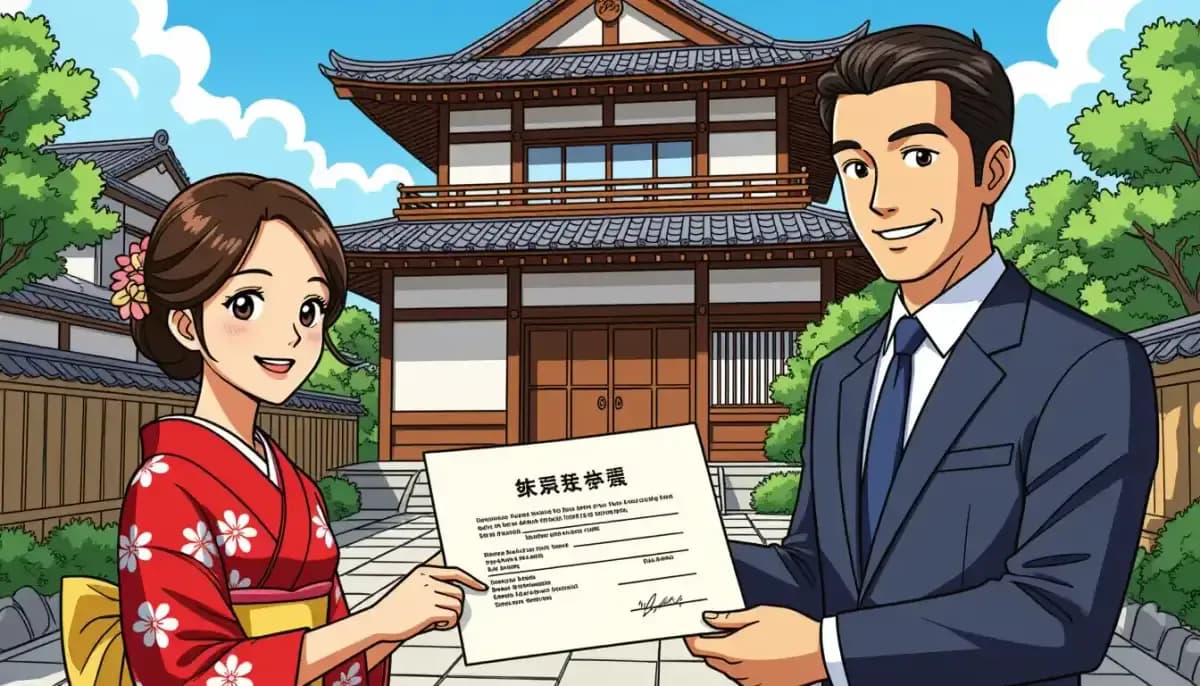
Learn how Japan's family trust (民事信託) protects your property from dementia and simplifies inheritance. A complete guide for foreign property owners on succession planning, tax implications, and setup steps.
Japan Property Succession Through Family Trust: A Complete Guide for Foreigners
If you own property in Japan and want to ensure it passes smoothly to your loved ones — or remains manageable if you ever lose capacity — a Japan family trust (民事信託, minjishintaku) may be one of the most powerful tools available to you. Yet many foreign property owners have never heard of it.
Japan's inheritance system is complex, layered with mandatory heirship rules, high tax rates, and bureaucratic procedures that can drag on for months. For foreigners especially, navigating the process without preparation can lead to frozen assets, court-appointed guardians, and unexpected tax bills. A properly structured family trust can sidestep many of these pitfalls.
This guide explains how family trusts work in Japan, how they apply to property succession, what foreigners need to know, and when you should seriously consider setting one up.
What Is a Family Trust (民事信託) in Japan?
A civil trust or family trust (民事信託) is a legal arrangement in which you — the settlor (委託者) — transfer ownership of your assets, including real estate, to a trustee (受託者) you designate. The trustee holds legal title to the property but manages it purely for the benefit of the beneficiaries (受益者), which can include yourself during your lifetime.
Unlike commercial trusts administered by banks or trust companies, a family trust is typically managed by a trusted family member. This creates a personal, flexible arrangement that adapts to your family's specific circumstances.
The three parties are:
| Role | Japanese Term | Who It Is |
|---|---|---|
| Settlor | 委託者 (itakusha) | You — the original property owner |
| Trustee | 受託者 (jutakusha) | Trusted family member (child, spouse) |
| Beneficiary | 受益者 (juekisha) | You during life; heirs after death |
The trust is created through a formal written agreement (信託契約書) and — critically for real estate — must be registered with the Legal Affairs Bureau (法務局) to reflect the trust arrangement on the property title.
For a deeper look at the full property ownership framework, see our guide on legal procedures and documentation for Japan property purchases.
Why Foreign Property Owners in Japan Need Succession Planning
Japan's default inheritance process is not friendly to foreign property owners. Here is what happens without a plan:
1. Inheritance tax is unavoidable for Japan-based property. Even if you live outside Japan, non-residents must pay Japanese inheritance tax on any real estate located within Japan. The top rate is 55%, though the basic exemption of ¥30 million plus ¥6 million per statutory heir provides meaningful relief for smaller estates.
2. Forced heirship rules override foreign wills. Japan's Civil Code mandates that spouses, children, and parents receive minimum shares of the estate (iryubun, 遺留分) regardless of what your will says. A foreign will drawn up under common law principles may clash directly with these mandatory shares.
3. The adult guardianship problem. If you lose mental capacity — through dementia, accident, or illness — Japan's courts frequently appoint a professional lawyer or licensed judicial scrivener as your legal guardian rather than a family member. For foreigners, this creates language barriers, high fees, and a loss of control over your own assets.
4. Japan's abandoned homes crisis. There are an estimated 8.5 million abandoned homes (空き家, akiya) across Japan — roughly 14% of all residential properties. Many became abandoned because heirs could not afford renovation costs, inheritance tax, or simply did not want the property. Without succession planning, your Japanese property could become part of this statistic.
For broader context on property ownership costs, see our article on property taxes and annual costs of owning property in Japan.
How a Family Trust Protects Your Property
A family trust addresses three distinct risks that standard inheritance planning does not:
1. Protection Against Dementia and Incapacity
This is perhaps the most overlooked benefit. If you establish a family trust before your decision-making ability is impaired, your designated trustee can continue managing your property seamlessly — paying taxes, collecting rent, approving repairs, even selling the property if the trust agreement allows it.
Without a trust, a dementia diagnosis effectively freezes your assets. No one can sell, mortgage, or significantly manage your property until the court appoints a guardian — which, as noted above, is often a professional stranger rather than your own family member.
Read more about dementia and family trust procedures at Kobe Legal Partners
2. Simplified Property Transfer at Death
When you pass away, property held in a family trust transfers automatically to the beneficiaries named in the trust deed — without going through the standard inheritance division procedure (isan bunkatsushougi, 遺産分割協議).
Standard inheritance in Japan requires all heirs to reach unanimous agreement on how to divide the estate. If any heir is unreachable, uncooperative, or has diminished capacity themselves, the entire process can stall for years. A trust bypasses this by pre-determining who receives what.
3. Avoiding Court Proceedings for Routine Management
The trustee can handle day-to-day property matters — renting out the property, arranging maintenance, paying fixed asset tax — without seeking court approval at each step. This is especially valuable for foreign property owners living overseas.
For more on managing property from abroad, see selling vs. renting when leaving Japan at Gaijin Buy House, which outlines the tax and management implications for non-resident owners.
Setting Up a Family Trust for Japanese Property: Step-by-Step
Establishing a family trust for real estate in Japan involves several concrete steps:
Step 1: Define the Trust Purpose and Terms
Work with a shihoshoshi (司法書士, judicial scrivener) or bengoshi (弁護士, attorney) to draft the trust agreement. Key decisions include:
- Who is the trustee? Typically an adult child or spouse who is capable and willing to manage the property.
- Who are the beneficiaries? You during your lifetime, with named successors upon your death.
- What can the trustee do? The agreement specifies powers — rent, sell, renovate, mortgage, etc.
- What happens at death? The trust can name successor trustees and specify how assets are distributed.
Step 2: Register the Trust on the Property Title
For real estate, the trust must be registered at the Legal Affairs Bureau. The property title will reflect:
- The trustee as the legal owner
- A notation that the property is held in trust (信託)
This registration is essential — without it, the trust has no legal effect against third parties for real property.
Step 3: Transfer the Property into the Trust
The settlor formally transfers ownership to the trustee. This is recorded on the property deed. Note: this transfer itself may have tax implications — consult your advisor about fixed asset transfer tax (fudosan shutokuzei) and registration tax.
Step 4: Ongoing Administration
The trustee is legally required to:
- Keep trust assets separate from personal assets
- Maintain accurate accounts and records
- Act solely in the beneficiaries' interests
- Report to beneficiaries as required by the trust agreement
Family Trust vs. Will vs. Adult Guardianship: A Comparison
| Feature | Will (遺言書) | Family Trust (民事信託) | Adult Guardianship (成年後見) |
|---|---|---|---|
| Effective when? | After death only | During life AND after death | After incapacity |
| Dementia protection? | No | Yes | Yes (but limited) |
| Avoids court proceedings? | Partially | Yes | No |
| Who controls assets? | Court-supervised executor | Named trustee | Court-appointed guardian |
| Flexibility | Limited | High | Very limited |
| Cost | Low setup | Moderate setup | High ongoing (professional fees) |
| Forced heirship override? | No | Partially | No |
As this comparison shows, a family trust offers the most comprehensive coverage for both incapacity and inheritance scenarios.
Tax Implications of Family Trusts in Japan
A family trust does not eliminate Japanese inheritance tax. When a beneficiary acquires a trust interest upon the settlor's death, inheritance tax is still imposed on that interest. However, the trust can streamline how the tax is paid and by whom.
Key tax points for foreign nationals:
- Japan-sited property is always taxable in Japan regardless of residency. Even if you live outside Japan for more than 10 years (which would normally exempt your worldwide assets), your Japanese real estate remains subject to Japanese inheritance tax.
- Gift tax look-back period is now 7 years. Transfers made within 7 years of death may be added back to the estate for tax calculation. Long-term trust planning must account for this.
- Foreign trusts are not a shield. Japan's National Tax Agency does not recognize foreign trusts (U.S.-style revocable trusts, for example) as a way to avoid Japanese inheritance tax on Japan-sited assets.
- Annual gift tax exemption: Beneficiaries can receive up to ¥1.1 million per year tax-free, but this requires long-term planning given the extended look-back period.
For detailed inheritance tax guidance, see Japanese Inheritance Tax: The Complete 2025 Guide at Investments for Expats and the overview of Japan's inheritance tax at Langley Esquire.
For comprehensive succession planning for foreigners, Living in Nihon's international succession guide covers applicable law, documentation, and specialist selection in detail.
Special Considerations for Foreigners
Foreign nationals using family trusts in Japan face a few additional complexities:
Language and legal differences. The trust agreement is drafted in Japanese and governed by Japanese law. Make sure you (and your trustee, if they are also a foreigner) fully understand the terms. Bilingual legal professionals are available but may charge a premium.
Choice of trustee. Your trustee must be an adult with legal capacity under Japanese law. If your preferred trustee lives abroad, they can still serve — but managing Japanese property from overseas adds complexity. Consider appointing a co-trustee or professional trustee alongside your family member.
Will still recommended. A family trust typically covers the assets placed into it, but you may still have other Japanese assets (bank accounts, investment accounts) that need a will. Drafting a kosei shosho (公正証書遺言, notarized will) through a Japanese notary public is strongly recommended alongside the trust.
Interaction with your home country's estate plan. If you have a U.S., UK, or Australian estate plan, your Japanese family trust should be coordinated with your overall planning. The two systems may interact in unexpected ways — for example, a U.S. revocable trust may not cover your Japanese property unless explicitly structured to do so.
For context on broader residency and property ownership issues, see our guides on visa and residency considerations for property buyers in Japan and buying property as a foreigner: complete guide.
For information on housing infrastructure and daily life as a foreigner in Japan, For Work in Japan's housing guide is a useful starting resource.
When Should You Consider a Family Trust?
A family trust is not the right tool for everyone. Consider it seriously if any of the following apply:
- You own Japan real estate valued at ¥20 million or more
- You are 60 years old or older (dementia risk increases substantially after 65)
- Your heirs include family members who may have difficulty cooperating (divorced families, step-children, overseas relatives)
- You want to keep property in the family across generations (can designate successor beneficiaries)
- You plan to leave Japan but retain the property as an investment or family home
- You have concerns about a particular heir's financial management ability
Situations where a will alone may suffice:
- Smaller estates under the basic exemption threshold
- Simple family structures with cooperative heirs
- Short-term ownership (planning to sell before death)
Finding a Specialist for Your Japan Family Trust
Family trust drafting in Japan is specialized work. Not all legal professionals are experienced with minjishintaku. Look for:
- Shihoshoshi (司法書士) — Judicial scriveners handle property registration and are often the primary drafters of family trust agreements
- Bengoshi (弁護士) — Attorneys for complex family situations, disputes, or cross-border planning
- Tax accountants (税理士) — For inheritance tax planning alongside the trust structure
When selecting a professional, ask specifically about their experience with family trusts for foreign nationals (gaikokujin). Bilingual professionals in Tokyo, Osaka, and Nagoya are increasingly available.
Conclusion
Japan's family trust system offers foreign property owners a powerful way to protect their assets during life and transfer them smoothly after death. By designating a trusted family member as trustee, you ensure that your Japanese property can be managed effectively if you lose capacity — and that it passes to your chosen beneficiaries without the delays and costs of standard inheritance procedures.
That said, a family trust is not a substitute for inheritance tax planning. Japan's tax rates are among the highest in the world, and Japan-sited property is always subject to Japanese inheritance tax regardless of your residency. The trust structure determines how assets pass; your tax advisor determines how to manage the liability.
If you own property in Japan and have not yet reviewed your succession plan, now is the time. A well-structured family trust, combined with a notarized Japanese will and coordinated international planning, gives you the best protection available under Japanese law.
For more on the full lifecycle of property ownership in Japan, explore our complete guide: buying property in Japan as a foreigner.

Originally from Vietnam, living in Japan for 16+ years. Graduated from Nagoya University, with 11 years of professional experience at Japanese and international companies. Sharing information about buying property in Japan for foreigners.
View Profile →Related Articles
Foreign Heir Inheriting Japan Property: Complete Process Guide
Complete guide for foreign heirs inheriting Japan property: legal process, required documents, inheritance tax rules, mandatory 2024 registration law, and step-by-step instructions for overseas heirs.
Read more →
Inheritance Tax Exemptions and Deductions for Japan Property
Complete guide to inheritance tax exemptions and deductions for Japan property owners. Learn about the basic exemption, spousal credit, property valuation discounts, and rules for foreign nationals.
Read more →
Japan Inheritance Tax Payment Methods and Deadlines
Learn about Japan inheritance tax payment methods including lump-sum, installment (延納), and in-kind (物納) options. Understand the strict 10-month deadline, penalties for late payment, and special rules for foreign nationals and non-residents.
Read more →
How to Calculate Japan Inheritance Tax on Property
Learn exactly how to calculate Japan inheritance tax on property step by step — from basic deductions and Rosenka valuations to progressive tax rates and credits for foreign heirs.
Read more →
Trust Structures for Japan Property Management and Succession
Learn how to use trust structures (kazoku shintaku) in Japan to manage and pass on property as a foreigner. Covers family trusts, inheritance tax, 2024 law changes, and setup steps.
Read more →
Japan Property Inheritance Registration Process
Complete guide to the Japan property inheritance registration process for foreigners. Learn mandatory deadlines, required documents, costs, and steps to register inherited real estate in Japan.
Read more →