
Earthquake Insurance in Japan: Coverage and Costs for Foreigners

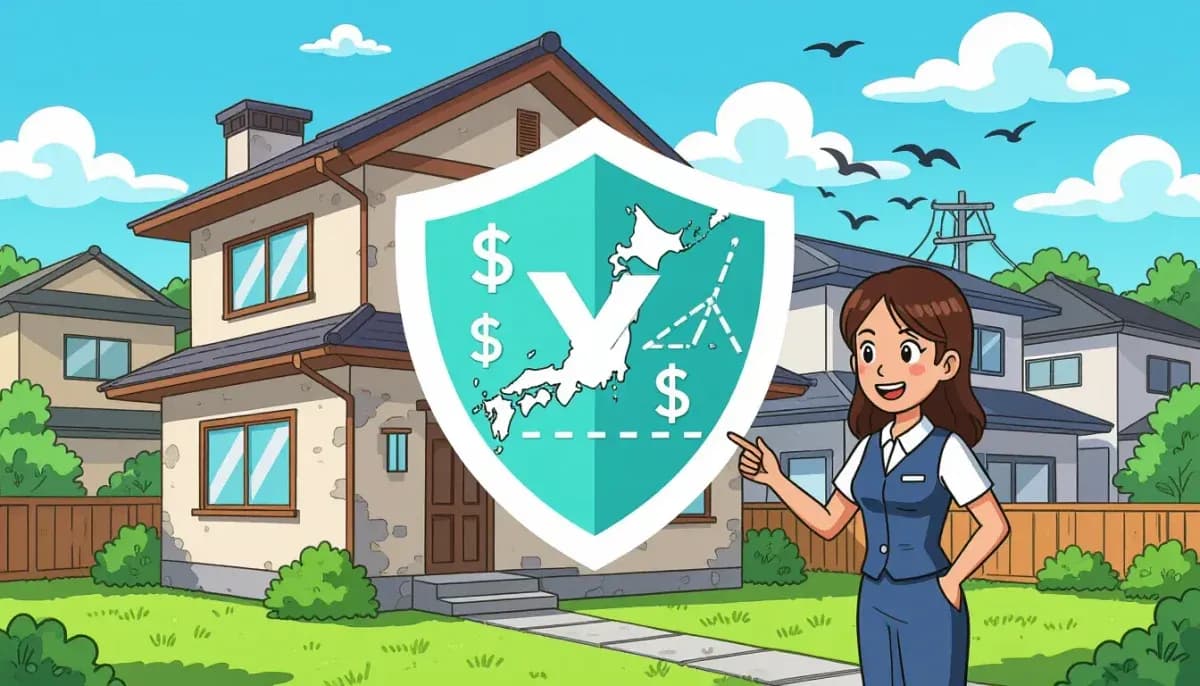
Complete guide to earthquake insurance in Japan for foreign residents and property owners. Learn what's covered, how much it costs, payout tiers, tax benefits, and how to buy jishin hoken as a foreigner.
Earthquake Insurance in Japan: Coverage and Costs for Foreigners
Japan sits on the Pacific Ring of Fire — with over 1,500 earthquakes recorded every year, the country is one of the most seismically active on Earth. For foreign residents and property owners, understanding earthquake insurance (jishin hoken, 地震保険) is not optional. A standard fire insurance policy, which most renters and homeowners carry, explicitly excludes damage caused by earthquakes, volcanic eruptions, and tsunamis. Without a separate earthquake rider, you have no protection for the risks most likely to affect Japanese property.
This guide explains exactly how Japan's earthquake insurance system works, what it covers, how much it costs, and how foreigners can buy it — with plain English explanations of the public-private reinsurance framework that makes the whole system possible.
What Is Earthquake Insurance in Japan?
Earthquake insurance (jishin hoken) is a supplementary insurance product that compensates policyholders for property damage caused by earthquakes, volcanic eruptions, and tsunamis (including fires triggered by earthquakes). It is NOT a standalone product — by law, it must be purchased as an add-on rider to a standard fire insurance (kaji hoken) policy.
This bundling is intentional. Standard fire insurance in Japan explicitly excludes all earthquake-related losses. The two products are sold together because the risks are closely linked: the vast majority of residential fire losses in a major earthquake scenario occur as secondary fires ignited by the quake, not direct structural collapse.
Who needs it:
- Homeowners (foreign or Japanese) insuring their building structure and/or household contents
- Renters who want to protect their furniture, electronics, and personal belongings
- Property investors purchasing condominiums or detached houses in Japan
Foreign residents with a valid visa and a Japanese address are fully eligible to purchase earthquake insurance. No Japanese citizenship or permanent residency is required.
How Japan's Earthquake Insurance System Works
Japan uses a unique public-private partnership to backstop earthquake insurance claims. The system was designed specifically because private insurers alone cannot absorb the catastrophic losses from a major earthquake affecting densely populated areas.
Here is how it works step by step:
- You buy from a private insurer — Tokio Marine, Sompo Japan, Mitsui Sumitomo Insurance, or others. The premium you pay is standardized by the government (Ministry of Finance), not set competitively by each company.
- Private insurer cedes 100% to JER — The insurer immediately transfers your full premium and all earthquake insurance liabilities to the Japan Earthquake Reinsurance Company (JER), a specialized reinsurance company co-owned by the private insurance industry.
- JER retrocedes risk to the government — The JER retrocedes a substantial portion of its accumulated risk to the government's Special Account for Earthquake Reinsurance, managed by the Ministry of Finance.
- Government backstop — The total system can handle up to approximately ¥12 trillion in payouts for a single catastrophic earthquake event — calibrated to the estimated losses from a repeat of the 1923 Great Kanto Earthquake.
Because premiums flow through JER and are government-set, the price you pay for earthquake insurance is identical regardless of which private insurer you choose. The only difference between insurers is the quality of their customer service and claims handling.
For more on the overall costs of owning property in Japan, see our guide to property taxes and annual costs in Japan.
Coverage Details: What Is and Is Not Covered
What Earthquake Insurance Covers
Earthquake insurance covers damage to buildings and/or household contents caused by:
- Earthquakes and aftershocks
- Volcanic eruptions
- Tsunamis
- Fires, floods, or other damage that directly results from any of the above
Coverage is provided for your primary residence only — vacation homes and investment properties used purely for rental income are not eligible for standard residential earthquake insurance.
Coverage Limits
| Item | Coverage Range | Maximum Cap |
|---|---|---|
| Building (structure) | 30–50% of fire insurance amount | ¥50,000,000 |
| Household contents | 30–50% of fire insurance amount | ¥10,000,000 |
| Recommended setting | 50% (maximum) | — |
The coverage cap is important to understand: earthquake insurance is explicitly designed as a "basic livelihood restoration" tool, not full replacement value coverage. You will not receive 100% of your property's value even in a total loss scenario.
What Is NOT Covered
- Damage from standard fires unrelated to earthquakes
- Theft or vandalism following an earthquake
- Business property or revenue losses
- Properties used primarily for commercial purposes
- Damage below the partial-loss threshold (see payout tiers below)
- Nuclear contamination losses
For comprehensive property protection, earthquake insurance must be combined with standard fire insurance, which covers the risks excluded here.
Payout Structure: How Claims Are Calculated
Unlike standard insurance, earthquake insurance does NOT pay based on actual repair costs. Instead, payouts are calculated as fixed percentages of your insured amount, based on a government-approved damage assessment:
| Damage Grade | Description | Payout |
|---|---|---|
| Total Loss (全損) | Building: ≥50% destroyed or ≥70% of floor area burned | 100% of insured amount |
| Large Half-Loss (大半損) | Building: 40–50% destroyed or 50–70% of floor area burned | 60% of insured amount |
| Small Half-Loss (小半損) | Building: 20–40% destroyed or 20–50% of floor area burned | 30% of insured amount |
| Partial Loss (一部損) | Building: 3–20% destroyed or foundation/walls flooded | 5% of insured amount |
| No payout | Damage below partial-loss threshold | ¥0 |
Example: If your building is insured for ¥10,000,000 under earthquake insurance and assessed as "large half-loss," you receive ¥6,000,000 — regardless of whether actual repairs cost more or less.
This tiered system was designed for rapid, transparent payouts in large-scale disasters where individual repair estimates would be impractical.
How Much Does Earthquake Insurance Cost in Japan?
Premiums for earthquake insurance are set by the Ministry of Finance and are identical across all private insurers. Rates vary based on two factors:
- Location (prefecture seismic risk zone) — Tokyo, Kanagawa, Chiba, and Shizuoka face the highest rates due to proximity to the Nankai Trough and other major fault systems.
- Building construction type — Wooden structures (mokuzou) pay significantly higher rates than reinforced concrete or steel-frame buildings.
Sample Annual Premium Estimates (Per ¥1,000,000 Insured)
| Construction Type | Tokyo / High-Risk Zone | Osaka / Mid-Risk Zone | Hokkaido / Lower-Risk Zone |
|---|---|---|---|
| Wooden (mokuzou) | ~¥3,200 | ~¥1,900 | ~¥740 |
| Reinforced concrete / Steel | ~¥1,800 | ~¥1,100 | ~¥480 |
Practical example: A concrete condominium in Tokyo insured for ¥10,000,000 under earthquake insurance costs approximately ¥18,000–¥24,000 per year.
Premium Discounts Available
You can reduce your earthquake insurance premium by 10–50% if your property qualifies for any of the following:
| Discount | Reduction |
|---|---|
| New construction (post-June 1981 seismic standards) | 10% |
| Seismic resistance Grade 1 certification | 10% |
| Seismic resistance Grade 2 or 3 certification | 20–30% |
| Earthquake-resistant certification | 10% |
| Seismic isolation (menshin) technology | 50% |
Ask your insurer or real estate agent whether your property qualifies. Older pre-1981 wooden structures in high-risk zones will pay the highest premiums; newer concrete buildings with seismic isolation pay significantly less.
For a broader look at property costs in Japan, see our hidden costs and fees when buying property in Japan guide.
How Foreigners Can Buy Earthquake Insurance in Japan
The process is straightforward. Most foreigners purchase earthquake insurance at the same time they purchase fire insurance — either when signing a rental contract or when closing on a property purchase.
Requirements
- Valid Japanese visa and registered address (juuminhyo)
- Active or simultaneously purchased fire insurance (kaji hoken) policy
- Basic property information: address, construction type, year built, floor area
- Japanese bank account for premium auto-debit (most common payment method)
- Proof of property ownership or rental contract
Where to Buy
| Option | Best For |
|---|---|
| Tokio Marine & Nichido | Largest Japanese insurer; English support available |
| Sompo Japan | Wide agent network; foreigner-friendly branches in major cities |
| Mitsui Sumitomo Insurance | Strong English documentation; online quote tools |
| Through your real estate agent | Convenient at time of purchase; agent handles paperwork |
| Online comparison sites (hoken no madoguchi, etc.) | Comparing quotes in Japanese |
Since all premiums are government-set, choosing between insurers is primarily about service quality and claims handling speed. Ask your real estate agent or relocation company for recommendations — they often have relationships with insurers who have English-speaking staff.
For more on the property buying process in Japan, our step-by-step home buying guide for foreigners covers insurance as part of the overall closing checklist.
Tax Benefits for Earthquake Insurance in Japan
Earthquake insurance premiums qualify for deductions from your Japanese income tax liability:
| Tax Type | Maximum Annual Deduction |
|---|---|
| National income tax (shotoku zei) | ¥50,000 |
| Local inhabitant tax (juuminzei) | ¥25,000 |
To claim the deduction, retain your premium payment certificate (seimei hoken ryou koujyo shoumeisho), issued annually by your insurer. Enter the deduction amount on your year-end tax adjustment (nenmatsuchousei) if you are a salaried employee, or on your final tax return (kakutei shinkoku) if you file independently.
This tax benefit partially offsets the cost of coverage, particularly for higher-value properties in high-risk zones.
Important 2025 Changes to Be Aware Of
Effective September 2025, the Japanese earthquake insurance system is implementing a significant procedural change: earthquake insurance policy terms will be automatically aligned with the associated fire insurance policy term.
Previously, earthquake insurance could be renewed on its own schedule with an auto-renewal option. Under the new rules, if your fire insurance covers five years, your earthquake insurance also covers exactly five years. At renewal, both policies renew together.
This change simplifies administration but means you need to actively confirm both policies when your renewal date arrives. Set a calendar reminder and verify your coverage remains active — especially after major life changes like moving to a new property or upgrading your home.
For updates on Japan's residential property environment, Living in Nihon and For Work in Japan are useful resources for English-speaking residents navigating housing and practical living topics.
Should You Get Earthquake Insurance? A Practical Assessment
Given Japan's seismic risk, the question is less "should I get earthquake insurance" and more "how much coverage do I need."
Strong case for coverage:
- You own the property (building structure is at risk)
- You live in a high-risk zone (Tokyo, Kanagawa, Chiba, Shizuoka, Osaka, Aichi)
- Your building is older wooden construction
- You have significant household contents (furniture, appliances, electronics)
Lower priority situations:
- You are a renter in a modern concrete high-rise with minimal personal belongings
- You are in a lower-risk prefecture (Hokkaido, northern Tohoku) and have emergency savings
- Your landlord has already insured the building structure (renters only need contents coverage)
The Japan Earthquake Reinsurance system is covered in detail by the Ministry of Finance's English-language documentation. For property-specific guidance in English, Gaijin Buy House is a recommended resource for foreign buyers navigating Japanese real estate. For detailed expat-focused insurance guides, see A-Realty's fire and earthquake insurance guide.
The overall adoption rate of around 35% — combined with a 68% attachment rate among fire insurance holders — reflects a market gradually recognizing the importance of earthquake coverage. For foreigners making long-term property decisions in Japan, securing earthquake insurance at the maximum allowed 50% of your fire insurance value is a straightforward risk management step that the tax deduction partially subsidizes.
See also our overview of mortgages and home loans for foreigners in Japan for additional context on financing property purchases alongside insurance considerations.

Originally from Vietnam, living in Japan for 16+ years. Graduated from Nagoya University, with 11 years of professional experience at Japanese and international companies. Sharing information about buying property in Japan for foreigners.
View Profile →Related Articles
Natural Disaster Insurance Coverage Gaps in Japan
Discover dangerous coverage gaps in Japan's natural disaster insurance system — earthquake, flood, and typhoon risks foreign property owners frequently overlook, with practical steps to protect yourself.
Read more →
Japan Property Insurance Renewal and Annual Review Guide
A complete guide to reviewing and renewing property insurance in Japan as a foreign owner. Covers fire insurance, earthquake insurance, the 2025 policy term changes, costs, and annual review checklists.
Read more →
Insurance for Vacant Properties and Akiya in Japan
Learn how to insure your akiya or vacant property in Japan as a foreigner. Covers fire insurance, earthquake coverage, costs, providers, and tips for non-residents.
Read more →
Japan Property Insurance Exclusions and Limitations to Know
Learn what Japan property insurance does NOT cover: earthquake damage, flood exclusions, basement flooding, commercial use limits, and more. Essential guide for foreign buyers.
Read more →
Japan Property Insurance Companies: Comparison for Foreigners
Compare Japan's top property insurance companies for foreigners. Learn about fire insurance, earthquake insurance costs, English-friendly providers, and how to apply as an expat.
Read more →
How to File an Insurance Claim in Japan: Property Owner Guide
Step-by-step guide to filing property insurance claims in Japan for foreigners. Learn Japan's three-tier damage system, required documents, language tips, and non-resident claim strategies.
Read more →