
Okinawa US Military Base Area Property Guide


Complete guide to buying and renting property near US military bases in Okinawa, Japan. Learn about BASE APPROVED certification, OHA allowances, best neighborhoods like Chatan and Ginowan, and how to achieve 10%+ yields as a foreign investor.
Okinawa US Military Base Area Property Guide for Foreigners
Okinawa is unlike anywhere else in Japan — a subtropical island chain where American military culture and Okinawan tradition have woven together over decades. For foreign investors and expats, this creates a uniquely compelling real estate opportunity: the chance to buy or rent property near one of the largest concentrations of US military bases in Asia, tapping into a stable, high-paying tenant base that most Japanese landlords have barely begun to exploit.
This guide covers everything you need to know about buying and renting property in Okinawa's military base areas — from understanding where the bases are, to navigating the BASE APPROVED certification process, to knowing which neighborhoods offer the best yields for property investors.
Understanding Okinawa's US Military Presence
The scale of the US military footprint in Okinawa is staggering. Approximately 70% of all US military facilities in Japan are concentrated on this island, occupying around 18,000 hectares — roughly 8.1% of Okinawa's total land area. When Okinawa reverted to Japanese sovereignty in 1972, the figure was closer to 28,000 hectares, so the footprint has been reduced over the decades but remains enormous.
There are 24 active US military installations across Okinawa, with the major ones being:
| Base | Branch | Location | Size | Community |
|---|---|---|---|---|
| Kadena Air Base | US Air Force | Kadena Town / Okinawa City | ~19.9 km² | Largest USAF base in East Asia |
| Camp Foster (Zukeran) | Marine Corps | Ginowan City | ~5.8 km² | Marine command HQ, medical centers |
| Camp Hansen | Marine Corps | Kin Town | ~51.9 km² | Major training installation |
| MCAS Futenma | Marine Corps | Ginowan City | ~4.8 km² | Controversial urban base, relocation pending |
| Torii Station | US Army | Yomitan Village | ~1.9 km² | USAG Okinawa headquarters |
| Camp Schwab | Marine Corps | Nago City | ~20.7 km² | Northern training area |
Over 50,000 US military personnel and civilians are stationed across these bases, with additional thousands of family members and civilian contractors. This creates an enormous and stable demand for off-base housing — which is where the property opportunity lies.
The Military Housing Market: How It Works
To understand the real estate opportunity near Okinawa's bases, you need to understand how US military housing works.
On-Base vs. Off-Base Housing
Every service member arriving in Okinawa has the option of on-base or off-base housing. On-base housing is provided by the military and does not require the service member to pay rent from their personal funds. However, there are approximately 3,500 on-base housing units across Okinawa's installations, and waitlists for these units typically run 6 to 18 months. New arrivals are almost always pushed into the off-base market immediately.
Off-base housing is funded through the Overseas Housing Allowance (OHA), a military benefit that covers actual rental costs plus a separate utility allowance. The key point for landlords: the US government pays the rent, not the individual service member. This makes military tenants among the most financially reliable renters you can find in any market.
Understanding OHA (Overseas Housing Allowance)
OHA is calculated based on rank, marital status, and number of dependents. For many mid-rank enlisted members (E5 with dependents, for example), the OHA rate often exceeds the actual market rent in Okinawa by ¥20,000–40,000 per month — a surplus the service member keeps. This creates an incentive for military families to seek well-priced housing, since they pocket the difference.
For landlords, OHA essentially means your rent is guaranteed by the US Department of Defense. Delinquency is virtually unknown in this market.
Move-In Housing Allowance (MIHA)
First-time arrivals also receive a Move-In Housing Allowance (MIHA), a one-time payment that covers upfront costs like key money, security deposit, and real estate agent fees. This removes one of the biggest friction points in Japanese rentals — the large upfront cash requirement — from the equation for military tenants.
Getting BASE APPROVED: The Key to the Military Rental Market
To legally rent your property to military personnel, it must receive BASE APPROVED certification from the relevant installation's housing office. For Kadena Air Base and nearby installations, this is the Kadena Housing Office.
The inspection process evaluates your property against American standards:
- Minimum size requirements — typically 70–80 m² for a standard family unit
- Appliances — must include a properly vented dryer (a rarity in Japanese homes), full-size refrigerator, and modern range
- Parking — at minimum two covered parking spaces are required for most family-sized units
- Safety and structure — fire safety systems, emergency exit accessibility, seismic standards
- Utilities — separate utility metering, air conditioning capacity sufficient for American expectations
Properties that fail initial inspection can be modified and re-submitted, but it is far more efficient to understand these requirements before purchasing a property you intend to rent to military tenants. Working with a real estate agent familiar with BASE APPROVED criteria is strongly recommended.
Once certified, your property appears in the Kadena Housing Office's approved listings, which is the primary source military families use to find rentals. This certification is not just helpful — it is essential. Without it, your property is effectively invisible to the military rental market.
For more details on the full property purchase process in Japan, see our step-by-step guide to buying property in Japan as a foreigner and our overview of hidden costs and fees when buying property in Japan.
Best Neighborhoods for Military Base Area Properties
The prime areas for military base area investment are clustered around Kadena Air Base and the Central Okinawa base complex. Here is a breakdown by neighborhood:
Chatan Town / Mihama (American Village Area)
Chatan is the most Americanized community in Okinawa, home to the famous "American Village" entertainment district and located 5–15 minutes from Kadena Air Base Gate 1. Properties here command the highest rents and move fastest.
Monthly rental range: ¥150,000–180,000 (~$1,000–1,200/month)
This is a first-choice area for military families who want easy access to American-style shopping, restaurants, and community life. Vacancy rates are extremely low.
Ginowan City
Ginowan surrounds MCAS Futenma and Camp Foster. It is the primary area for Marine Corps families and offers excellent access to the base medical facilities, commissary, and schools.
Monthly rental range: ¥140,000–170,000/month
Ginowan offers a good mix of value and demand, with strong family-oriented communities and proximity to international schools. Note that MCAS Futenma's long-delayed relocation remains politically contentious — long-term, Futenma's closure could reduce demand in Ginowan, though this has been "imminent" for over two decades.
Okinawa City (Koza)
Okinawa City sits directly adjacent to Kadena's Gate 2 and has historically been the center of Okinawa's military-adjacent economy. It offers a more authentic, local atmosphere than Chatan, with lower rents but still strong demand.
Monthly rental range: ¥130,000–160,000/month
For investors prioritizing yield over top-line rents, Okinawa City can offer better returns due to lower purchase prices combined with solid demand.
Uruma City
Uruma is further east and slightly less convenient for most base personnel, but it offers the best value in the region. Torii Station is located within Uruma's boundaries, making it the primary area for Army personnel.
Monthly rental range: ¥120,000–150,000/month
Properties in Uruma City can offer high yield due to lower acquisition costs, and the area is seeing gradual gentrification as demand radiates outward from the central base areas.
For a broader comparison of neighborhoods across Okinawa, see our guide to best neighborhoods in Okinawa for foreign property buyers.
Investment Returns: What Can You Realistically Expect?
Rental yields from military tenants are frequently described in investment circles as potentially "double digit" — significantly above the typical Japanese residential yield of 7–8%. The logic is simple: housing allowances from the US government are often twice or even three times what a standard Japanese tenant would pay for a comparable property.
A concrete example:
- A 90 m² property in Okinawa City purchased for ¥15,000,000
- Rented to a military family for ¥155,000/month
- Annual gross rent: ¥1,860,000
- Gross yield: 12.4%
Compare this to a similar property rented to a Japanese tenant at ¥70,000–80,000/month — a yield of roughly 5.6–6.4%.
The caveat is that BASE APPROVED properties often require upfront investment in appliances, a vented dryer, larger parking, and sometimes layout modifications. Budget ¥1,000,000–3,000,000 ($6,700–20,000) for renovations on an older property.
For financing details, our guide to mortgages and home loans for foreigners in Japan covers what options are available, though non-resident foreign buyers may face limited mortgage access and should prepare to pay cash or arrange financing in their home country.
Legal Considerations for Buying Near Military Bases
Japan has no restrictions on foreigners purchasing property. No residency, citizenship, or special permit is required. You can purchase land and buildings as a non-resident foreign national. See our legal rights guide for foreign property buyers in Japan for a complete overview.
However, there is an important emerging risk specific to properties near military installations: the Japanese government has proposed regulations on foreign purchases of land within a defined perimeter around Self-Defense Force (JSDF) and US military bases. As of 2026, existing laws require foreign landowners near designated sensitive areas to register their ownership and intended use, and authorities have proposed expanded review powers over foreign transactions in these zones.
This does not currently prevent foreign purchase — it adds reporting requirements and introduces potential future restrictions. Investors should:
- Monitor legislative developments closely
- Purchase with legal counsel familiar with current regulations
- Be prepared to demonstrate legitimate residential or investment intent
The practical risk for most residential property purchases is low — these regulations are primarily aimed at land acquisition for surveillance or strategic purposes, not standard housing investment.
Upfront Costs and What to Budget
Even with OHA covering ongoing rent, both landlords and tenants face significant upfront costs in Japan's rental market.
For tenants moving off-base, typical upfront costs include:
- Key money (礼金): 1–2 months' rent (non-refundable)
- Security deposit (敷金): 1–2 months' rent
- Real estate agent fee: up to 1 month's rent + tax
- First month's rent
- Move-in utilities and setup fees
Total upfront cost: ¥500,000–800,000 (~$3,300–5,300) for a family-sized unit. MIHA covers most of this.
For property investors, upfront acquisition costs on top of the purchase price include:
- Real estate agent commission: 3% + ¥60,000 + tax
- Registration and acquisition taxes: ~4–5% for non-Japanese properties, varies
- Judicial scrivener fees for title transfer: ¥100,000–250,000
- BASE APPROVED renovation costs: ¥1,000,000–3,000,000+
See our complete breakdown of property taxes and annual costs in Japan for ongoing ownership expenses.
Working with Real Estate Agents in Okinawa
Not all Okinawa real estate agents understand the military rental market. When investing for military tenancy, seek agents who:
- Speak English and have experience with military families
- Know the BASE APPROVED inspection requirements intimately
- Have relationships with the Kadena or Camp Foster housing offices
- Can advise on OHA rate structures for different property configurations
Several agencies in the Chatan and Ginowan areas specialize in exactly this market, operating in English and handling the full process from property search to BASE APPROVED certification.
For more information on the broader Okinawa property market and pricing, see our Okinawa property prices and market comparison guide and our Naha City property guide for the capital city perspective.
You can also find helpful resources from the expat community at Living in Nihon, which covers life in Japan for foreigners in depth, and For Work in Japan if you are considering relocating for work alongside your property investment.
For investor-focused analysis of buying property near US military installations in Japan, Gaijin Buy House is a useful resource dedicated to foreign buyers navigating Japan's real estate market.
For PCS-specific housing details, the Garrison Ledger Okinawa PCS Guide and Sunny's Housing Agency are excellent practical references used by military families.
Frequently Asked Questions
Can I rent to military tenants without being a resident of Japan? Yes. You can purchase and rent out property in Japan as a non-resident foreign national. You will need to pay Japanese income tax on rental income and file returns, typically through a tax representative (納税管理人) you designate.
What happens if the base closes or reduces its presence? This is a real risk, though Kadena Air Base — the largest installation — is considered a permanent strategic asset. MCAS Futenma's closure has been discussed since 1996 and remains unresolved. Investors should prioritize properties near Kadena and Camp Foster over Futenma-dependent areas.
Is the military rental market saturated? No. The market is actually underdeveloped from an investor's perspective. Most military-area housing is owned by local Japanese landlords who often charge below-market rates due to unfamiliarity with OHA dynamics. Sophisticated investors with BASE APPROVED properties in premium condition can still command significant premiums.
Do I need to manage the property myself? Property management services exist in Okinawa that handle everything from maintenance requests to tenant communication in English. For non-resident investors, this is the practical way to own rental property here.
Okinawa's military base areas represent one of the most unusual and potentially lucrative real estate niches in all of Japan. For foreigners willing to navigate the BASE APPROVED process and understand the OHA system, the combination of strong tenant demand, government-backed rent payments, and still-low acquisition costs creates a compelling investment thesis. Our full guide to buying property in Okinawa as a foreigner covers all aspects of the island's property market to help you get started.

Originally from Vietnam, living in Japan for 16+ years. Graduated from Nagoya University, with 11 years of professional experience at Japanese and international companies. Sharing information about buying property in Japan for foreigners.
View Profile →Related Articles

Okinawa New Development Projects and Growth Opportunities
Discover Okinawa's booming development landscape: JUNGLIA theme park, 264.7 billion yen government funding, Special Economic Zone tax incentives, and real estate growth opportunities for foreign investors in 2025 and beyond.
Read more →
American Village (Chatan) Area Property Guide
Complete guide to buying property in American Village (Chatan), Okinawa as a foreigner. Covers prices, neighborhoods, legal steps, investment potential, and expat living tips.
Read more →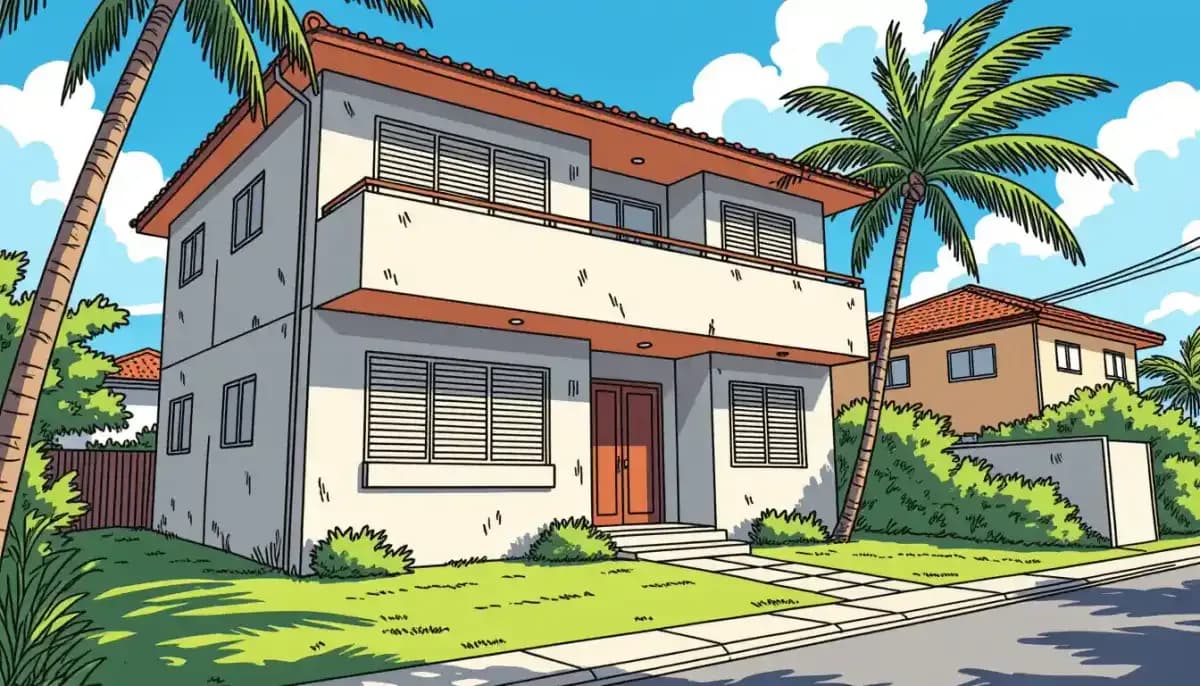
Okinawa Property and Typhoon Weather Considerations
Buying property in Okinawa? Learn about typhoon season, RC construction standards, hazard maps, and the insurance coverage foreigners need for typhoon-proof homeownership.
Read more →
Miyako and Ishigaki Island Property Guide for Foreigners
Complete guide to buying property on Miyako and Ishigaki islands in Okinawa as a foreigner. Covers legal rights, prices, mortgages, buying process, and investment potential for these tropical Japanese islands.
Read more →
Okinawa Rental Property and Tourism Investment Guide
Complete guide to Okinawa rental property and tourism investment for foreign buyers. Covers Minpaku regulations, vacation rental yields, top investment areas, property management models, and tax obligations for non-resident investors.
Read more →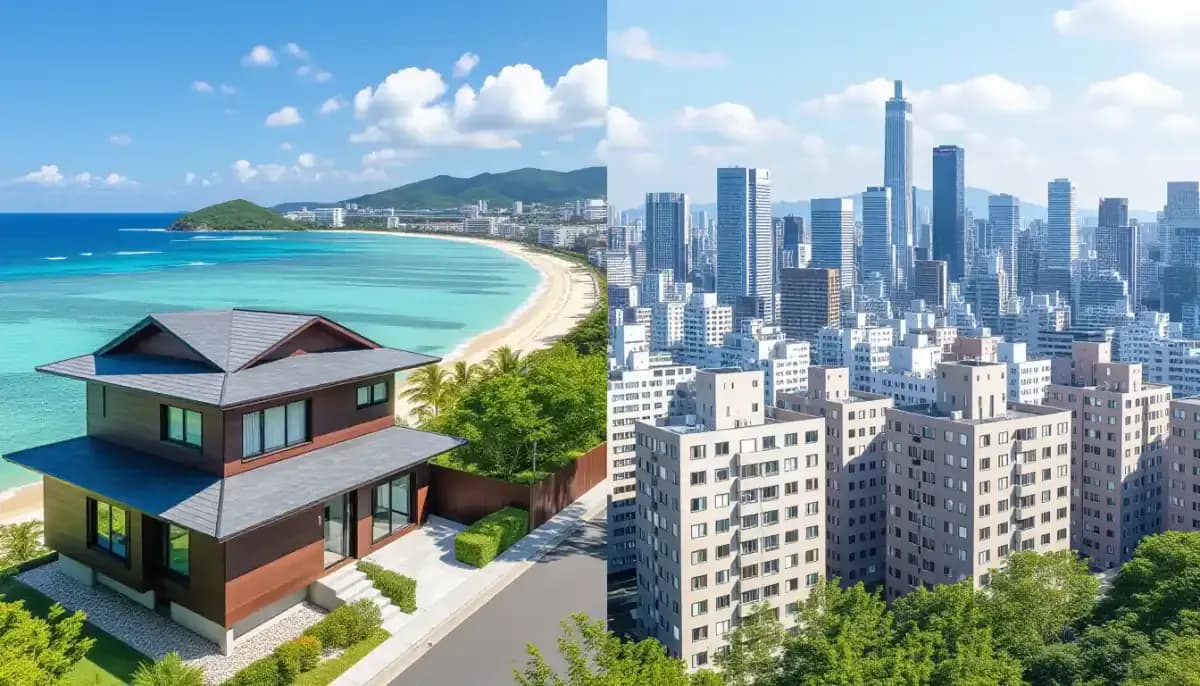
Okinawa vs Mainland Japan Property Comparison for Buyers
Comprehensive comparison of buying property in Okinawa vs mainland Japan. Explore prices, investment potential, lifestyle differences, and which location suits foreign buyers best in 2025.
Read more →