
Japan Office Building Investment Analysis for Foreigners

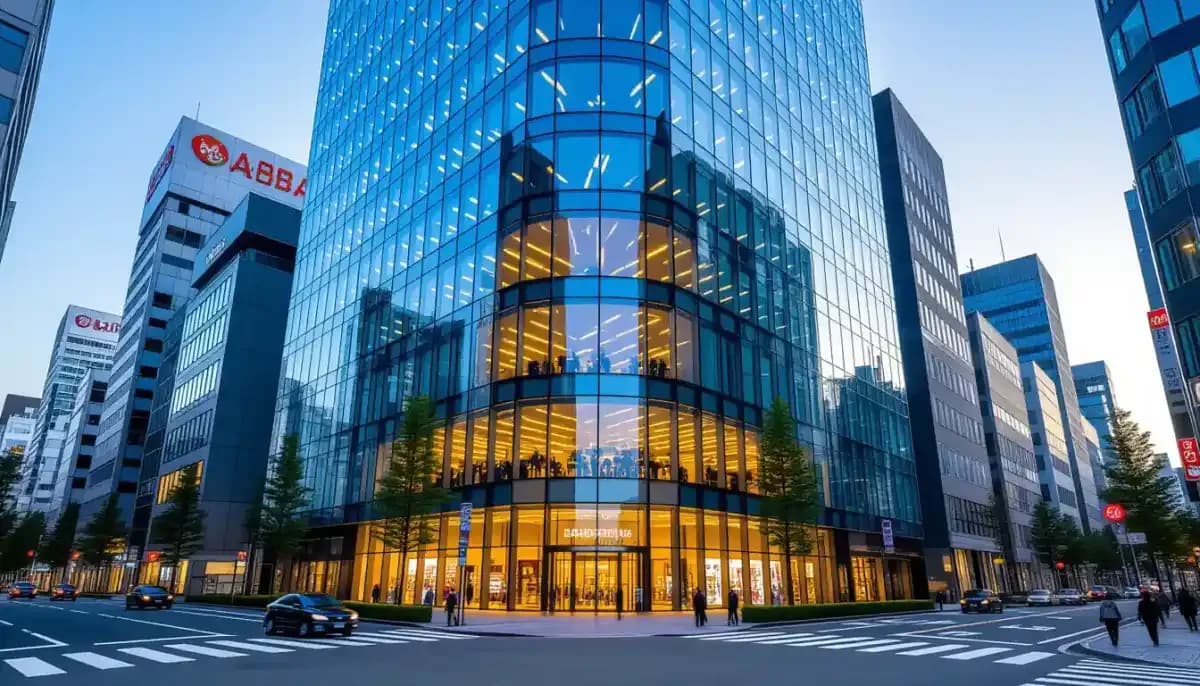
A complete analysis of Japan office building investment for foreigners: market size, yields, legal requirements, due diligence, financing structures, and 2025 outlook for commercial real estate in Tokyo and beyond.
Japan Office Building Investment Analysis for Foreigners
Japan's commercial real estate market has emerged as one of the most compelling destinations for foreign capital in recent years. With the yen at historically favorable exchange rates, a stable legal framework that treats foreign buyers equally to Japanese nationals, and Grade A office vacancy rates below 3.5% in Tokyo's core wards, the case for office building investment in Japan has never been stronger. This guide breaks down everything a foreign investor needs to know — from market fundamentals and yield expectations to legal requirements and due diligence processes.
Why Japan's Office Market Attracts Foreign Investors
The Japan office real estate market was valued at USD 76.76 billion in 2025 and is forecast to reach USD 82.43 billion by 2030, growing at a CAGR of approximately 1.44%. While modest by global standards, this steady growth is underpinned by structural factors that make Japan particularly attractive to offshore capital.
Tokyo dominates with 57% of national office market share, supported by deep corporate clusters, consistent demand from IT and financial services sectors, and repeated record inflows of foreign capital. In Q4 2024 alone, foreign investor transactions surged 68% year-over-year. Total foreign investment in Japanese real estate reached JPY 2.3 trillion ($15.7 billion USD) in 2024 — a 12% increase from the prior year.
Several factors drive this appetite:
- Currency advantage: A weak yen means USD, EUR, and other hard currencies stretch significantly further when acquiring assets
- Yield premium: Tokyo prime office yields of 3.5–4.5% compare favorably against near-zero yields in many European and Asian gateway cities
- Market stability: Japan's institutional-grade commercial property market offers transparent pricing, reliable title systems, and predictable legal outcomes
- Rent growth momentum: Grade A Tokyo office rents reached JPY 32,400 per square meter per month in 2024 — a 4.9% year-on-year increase — reflecting sustained demand from expanding multinationals and domestic enterprises
For a deeper grounding in Japan's broader property market dynamics, the Japan Real Estate Market Overview and Trends for Foreigners is an essential starting point before focusing on commercial assets.
Understanding Japan's Office Building Market Structure
Not all office buildings in Japan are created equal. Understanding the grade classification system is critical to making sound investment decisions.
Grade A buildings represent the highest quality — post-2000 construction (or major refurbishment), earthquake-resistant structures meeting the latest seismic codes (post-1981 and especially post-2000 standards), large floor plates (typically 500 sqm+), and premium amenities including raised floors, high ceilings, and top-tier mechanical systems. Grade A assets commanded 61% of Japan's office real estate market share in 2024.
Grade B buildings are mid-tier. Older construction, often 1980s–1990s, with smaller floor plates and fewer amenities. These can offer higher yields but come with greater vacancy risk and potential retrofit capital expenditure.
Grade C represents older stock — often 1970s or earlier construction — facing structural challenges around seismic compliance. These assets carry the highest risk of functional obsolescence.
The market is clearly bifurcating: prime locations near major transit hubs (Tokyo Station, Shinagawa, Shinjuku) command premium rents with low vacancy, while peripheral older properties face rising vacancy and downward rental pressure. Smart foreign investors are concentrating on Grade A and well-located Grade B assets.
Regional markets beyond Tokyo are also gaining traction. Osaka's Grade A vacancy stands at 2.6% as of Q1 2025, with rents at JPY 25,000 per sqm/month — roughly 23% below Tokyo rates, presenting a relative value opportunity as Osaka's economy expands ahead of the 2025 World Expo legacy investments. Fukuoka and Nagoya have also shown strong absorption in 2024.
Legal Framework: Can Foreigners Buy Office Buildings in Japan?
The short answer is yes — freely and without restriction. Japan imposes no nationality-based limits on foreign property ownership. Whether you're a US citizen, EU national, or Southeast Asian investor, you can purchase office buildings, commercial land, and mixed-use properties under the same legal framework as Japanese buyers.
Key legal requirements for foreign buyers include:
Foreign Exchange and Foreign Trade Act (FEFTA) Notification: Non-resident foreign buyers must file a notification with Japan's Ministry of Finance within 20 days of completing a commercial property purchase. Failure to file triggers financial penalties. This is a reporting obligation, not an approval requirement — the purchase can proceed regardless.
Tax Representative Appointment: Non-resident owners must designate a Japanese tax representative (zeirishi or a qualified professional) to handle local tax filings, including annual fixed asset tax (1.4%) and city planning tax (0.3%).
Title and Registration: Property ownership is registered through a judicial scrivener (shiho shoshi) who files with the Legal Affairs Bureau. All documentation is in Japanese, making professional support essential.
For a comprehensive overview of the legal steps involved, see our guide on Legal Procedures and Documentation for Japan Property Purchase.
Living in Nihon's guide on buying property and mortgages in Japan for foreigners also covers the procedural framework in detail, including how residency status affects financing options.
Office Building Investment Costs and Yield Analysis
Understanding the full cost stack is essential to building an accurate investment model.
Acquisition Costs
| Cost Item | Estimated Rate |
|---|---|
| Property acquisition tax | 3–4% of assessed value |
| Registration and license tax | 1.5–2% of assessed value |
| Real estate agent commission | 3% + ¥60,000 + consumption tax |
| Judicial scrivener fees | ¥100,000–¥300,000 |
| Building inspection / due diligence | ¥200,000–¥500,000 |
| Total acquisition overhead | 7–10% of purchase price |
Ongoing Holding Costs
Annual fixed asset tax and city planning tax combined run approximately 1.7% of assessed value. For a ¥500 million office building, this represents roughly ¥8.5 million per year in holding costs before management fees, insurance, and maintenance reserves.
Property management companies typically charge 3–8% of gross rental income for commercial assets, depending on asset size and management scope.
Yield Expectations
Commercial office buildings in Japan offer the following gross yield ranges based on building grade and location:
| Asset Type | Price Range | Gross Yield |
|---|---|---|
| Tokyo Grade A office (core) | ¥2B–¥20B+ | 3.0–4.5% |
| Tokyo Grade B office (central) | ¥500M–¥2B | 4.5–6.5% |
| Tokyo Grade B/C (suburban) | ¥100M–¥500M | 6.0–8.0% |
| Osaka Grade A/B office | ¥300M–¥3B | 4.5–7.0% |
| Regional city office (Nagoya, Fukuoka) | ¥100M–¥500M | 6.0–9.0% |
National average gross yield across commercial property types sits at approximately 4.2%, but well-selected office assets in growth locations can deliver 5–8% gross. Net yields after management, tax, and maintenance typically run 1.5–2.5 percentage points below gross.
For context on broader property ownership costs, the Property Taxes and Annual Costs of Owning Property in Japan guide provides a detailed breakdown.
Gaijin Buy House's Japan real estate investment guide for foreigners also covers yield calculation methodology in practical terms.
Financing an Office Building Purchase as a Foreign Investor
Access to Japanese bank financing is the most significant practical barrier for non-resident foreign investors. Unlike residential purchases, commercial real estate loans from Japanese institutions are generally available only to:
- Companies incorporated in Japan (KK or GK structures)
- Individuals with long-term residency and verifiable income in Japan
- Offshore entities with demonstrated Japanese business ties
Typical lending conditions for foreign investors:
- Down payment: 30–40% of purchase price (some lenders require 40–50% for non-residents)
- Loan term: 15–25 years for commercial assets
- Interest rates: 1.5–2.5% for corporate borrowers (variable); fixed rates higher
- Lenders: Regional banks and shinkin banks in target markets; some trust banks for larger tickets
Structuring alternatives used by offshore investors include:
- Tokumei Kumiai (TK) structures: Anonymous partnership arrangements commonly used by foreign funds to invest in Japanese real estate with favorable tax treatment
- GK-TK structures: Godo Kaisha (LLC equivalent) acting as the property-owning entity, with a TK investor providing capital — the dominant structure for institutional offshore investment in Japan
- J-REIT exposure: For smaller investors who want office market exposure without direct ownership complexity
Many foreign buyers work with specialist advisors who can navigate these structures. For a broader look at financing options, see our Mortgages and Home Loans for Foreigners in Japan guide, and the For Work in Japan housing and living guide covers financial planning for those establishing a Japanese base.
Due Diligence: What to Check Before Buying an Office Building
Commercial property due diligence in Japan is more complex than residential purchases and must cover several layers.
Structural and Seismic Compliance Japan enforces strict seismic standards. Buildings constructed before June 1981 may not meet the "New Seismic Standard" (Shinseitai) — a critical risk factor. Post-2000 buildings typically exceed minimum requirements. Always commission an independent structural survey (taishinkidan) and review the building's seismic evaluation certificate.
Building Management and Lease Review Review all existing tenant leases carefully. Japan's land and building lease law (Shakuchi Shakka Ho) provides significant tenant protections — evicting a non-performing commercial tenant can be legally complex and time-consuming. Fixed-term leases (Teiki Shakuya Keiyaku) offer landlords more flexibility and are standard for Grade A office space.
Environmental Assessment For older properties, soil contamination surveys are advisable, particularly if the site has industrial history. Remediation liability can be substantial.
CAPEX Reserve Assessment Evaluate the building's remaining useful life for mechanical systems (HVAC, elevators), facade condition, and any required seismic retrofit work. Grade C buildings often require significant capital investment to remain competitive.
Tax Structuring Pre-Purchase Engage a Japanese tax advisor before signing. The difference between acquiring assets through a Japanese corporation versus direct personal ownership can significantly affect both acquisition tax treatment and ongoing income tax obligations.
Tax Implications for Foreign Office Building Investors
Japan's tax treatment of commercial real estate income for non-residents is structured as follows:
Rental Income: Non-resident individuals earning Japanese-source rental income are subject to withholding tax at 20.42% on gross rental payments. Under a tax treaty with Japan (applicable to 70+ countries), this may be reduced. Japanese-incorporated entities pay corporate tax at approximately 23.2% on net profits.
Depreciation: Commercial buildings in Japan are depreciable over 39 years (reinforced concrete). Annual depreciation deductions reduce taxable income significantly in the early years of ownership.
Capital Gains: Properties held for less than 5 years face an effective capital gains tax of approximately 39–40% (short-term rate). Properties held longer than 5 years are taxed at approximately 20% (long-term rate). Timing exit timing accordingly can dramatically affect net returns.
Consumption Tax (JCT): Commercial real estate transactions are subject to 10% consumption tax on the building portion (not land). For registered businesses, this is recoverable as an input tax credit — an important consideration for corporate buyers.
Understanding these obligations before closing is critical. Our Hidden Costs and Fees When Buying Property in Japan guide covers many of these points from the investor's perspective.
Market Outlook: Office Investment Prospects for 2025–2030
The medium-term outlook for Japan's office market is constructive, with several structural tailwinds supporting continued investment appeal.
Supply discipline: New completions in Tokyo's core wards remain constrained, with limited large-scale development sites available. This structural undersupply supports occupancy and rent growth in prime assets.
Corporate demand recovery: Post-pandemic office reoccupation has progressed further in Japan than in many Western markets. Return-to-office rates are high, supported by Japan's collaborative work culture and commuter-oriented urban geography.
ESG premium: Tenants increasingly prioritize sustainability-certified buildings. LEED, CASBEE, and DBJ Green Building-certified assets command 10–20% rent premiums and attract higher-quality tenant covenants. Buildings without ESG credentials face growing functional obsolescence risk.
Record investment volumes: Full-year 2025 investment volume is forecast to top JPY 6 trillion — a new single-year record — reflecting sustained global capital interest in Japanese commercial assets.
Risks to monitor: Rising construction costs are compressing development returns; the Bank of Japan's gradual interest rate normalization is increasing financing costs; and remote work trends, though less severe than in Western markets, remain a wildcard for long-term office demand in peripheral locations.
For investors evaluating specific cities, our regional guides on buying property in Tokyo as a foreigner and buying property in Osaka as a foreigner provide granular market context.
Additional market data is available through Plaza Homes' Japan Real Estate Market 2024–2025 analysis and the Mordor Intelligence Japan Office Real Estate Market report.
Getting Started: Steps for a Foreign Investor Targeting Japan Office Buildings
- Define your investment thesis: Grade A core income, value-add Grade B, or opportunistic Grade C redevelopment? Each has different risk-return profiles and financing implications.
- Establish a Japanese legal entity: Most institutional investors use a GK-TK structure. Seek legal and tax advice before structuring.
- Engage a licensed real estate agent (Takken): Only licensed real estate agents (fudosan kanrishi) can handle commercial transactions legally. Choose one with commercial property specialization and English capability.
- Conduct thorough due diligence: Structural, legal, environmental, and financial — never skip any layer.
- Arrange financing pre-approval: Know your capital structure before entering negotiation.
- File FEFTA notification: Within 20 days of closing — non-negotiable.
- Appoint property management: Select a management company experienced with commercial tenants before tenant onboarding.
Japan's office building market rewards disciplined, informed investors who understand both the opportunity and the operational complexity. With the right team, appropriate structuring, and a clear investment mandate, foreign buyers can access one of Asia's most stable and high-quality commercial real estate markets.
For a complete overview of property ownership rights and the investment landscape, start with our Complete Guide to Buying Property in Japan as a Foreigner.

Originally from Vietnam, living in Japan for 16+ years. Graduated from Nagoya University, with 11 years of professional experience at Japanese and international companies. Sharing information about buying property in Japan for foreigners.
View Profile →Related Articles
Japan Commercial Property Zoning Regulations Explained
Learn how Japan's 13 land use zones affect commercial property purchases. Understand FAR limits, permitted uses, environmental rules, and what foreign buyers need to know before investing.
Read more →
Financing Options for Commercial Property in Japan
Complete guide to financing commercial property in Japan as a foreigner. Learn about investment loan types, lender options, corporate structure routes, and eligibility requirements for expats and non-residents.
Read more →
Managing Commercial Property in Japan as a Foreign Owner
Complete guide to managing commercial property in Japan as a foreign owner. Covers legal requirements, property management, taxes, tenant relations, and overseas remittance tips.
Read more →
Commercial Property Due Diligence in Japan
Master commercial property due diligence in Japan with this complete guide for foreign investors. Covers title checks, seismic compliance, environmental assessments, lease review, tax costs, and regulatory obligations.
Read more →
Japan Mixed-Use Building Investment Guide
Complete guide to investing in Japan mixed-use buildings as a foreigner. Covers yields, financing, due diligence, taxes, and the buying process for retail-residential properties.
Read more →
Commercial Property Tax Differences in Japan
Learn how commercial property taxes in Japan differ from residential. Full guide covering acquisition tax (4% vs 3%), fixed asset tax, capital gains, and tips for foreign investors.
Read more →