
Freehold vs Leasehold Property in Japan Explained

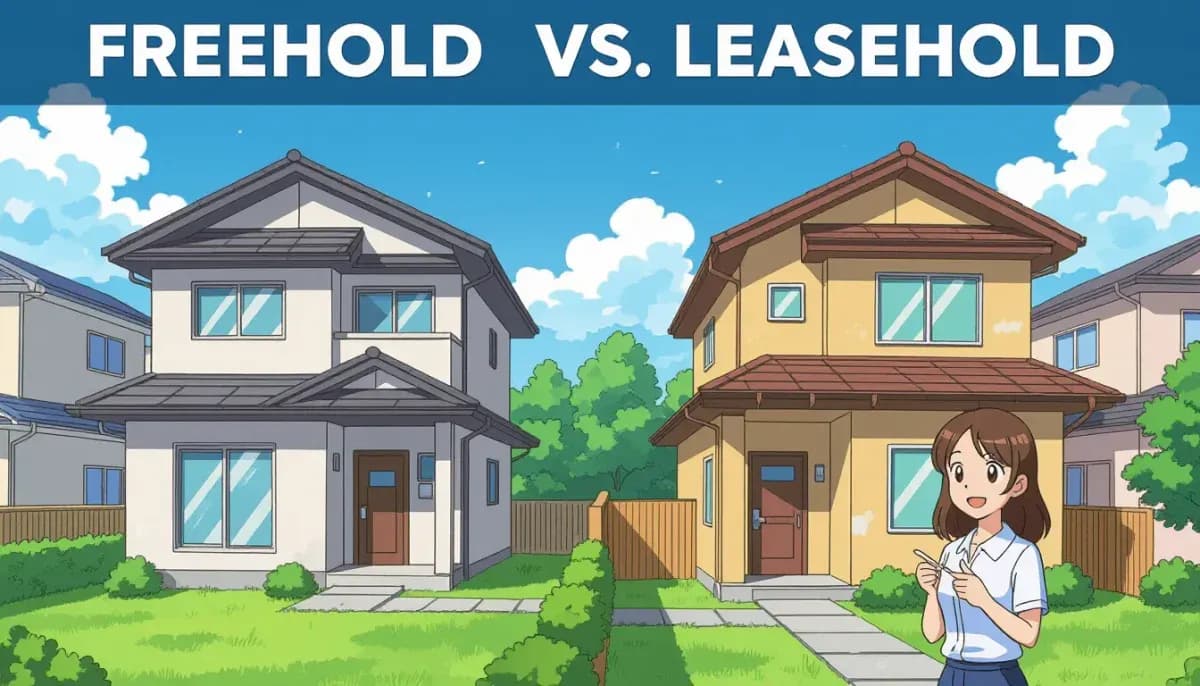
Understand the key differences between freehold and leasehold property ownership in Japan. Learn about costs, taxes, legal rights, and which is better for foreign buyers in 2025.
Freehold vs Leasehold Property in Japan Explained
When buying property in Japan as a foreigner, one of the most important distinctions you'll encounter is the difference between freehold and leasehold ownership. These two types of land rights affect your costs, flexibility, long-term investment value, and even your ability to renovate or sell. Understanding them before you sign any contract is essential.
This guide breaks down everything you need to know about freehold (所有権, shoyuken) and leasehold (借地権, shakuchiken) property in Japan—what each means, the pros and cons, and how to choose the right one for your situation.
What Is Freehold Property in Japan?
Freehold ownership, known in Japanese as 所有権 (shoyuken), means you own both the building and the land it sits on, outright and permanently. There is no time limit, no ground rent, and no need to seek permission from a third party when you want to renovate, sell, or pass the property to your heirs.
Freehold is the standard form of ownership for most residential properties in Japan and the type most foreigners are familiar with from their home countries. When you buy freehold, the land title is registered in your name at the Legal Affairs Bureau (法務局), giving you complete legal control.
Key characteristics of freehold ownership:
- You own the land and building permanently
- No monthly or annual ground rent payments
- Full freedom to renovate, rebuild, or sell without landowner approval
- Property taxes apply to both land and building
- Easier to obtain a mortgage from Japanese banks
- Stronger resale value and inheritance appeal
What Is Leasehold Property in Japan?
Leasehold, or 借地権 (shakuchiken), means you own the building but lease the land from a separate landowner. You pay ongoing ground rent (地代, chidai) and must seek the landowner's consent for major changes like selling or rebuilding.
Leasehold properties are common in densely populated urban areas such as Tokyo, where land values are extremely high. They are often significantly cheaper to purchase upfront—typically 60–70% less than comparable freehold properties—making them attractive to budget-conscious buyers.
The governing law for these arrangements is Japan's Land Lease and House Lease Law (借地借家法, revised in 1992), which sets minimum lease terms and protects tenant rights. Crucially, all foreigners have the same rights as Japanese nationals when it comes to leasehold ownership.
Types of Leasehold Rights in Japan
Not all leasehold arrangements are the same. There are several distinct categories, each with different rules:
| Type | Initial Term | Renewal | Notes |
|---|---|---|---|
| Old Land Lease (pre-1992) – Wooden | 30 years | Every 20 years | Near-perpetual renewal |
| Old Land Lease (pre-1992) – Concrete | 60 years | Every 30 years | Near-perpetual renewal |
| Ordinary Leasehold (post-1992) | 30 years minimum | Indefinitely renewable | Most common new type |
| Fixed-Term Leasehold (定期借地権) | 50+ years | Non-renewable | Land returns to owner at expiry |
| Business-Use Fixed-Term Leasehold | 10–50 years | Non-renewable | Commercial properties |
Ordinary leasehold (普通借地権) is the most tenant-friendly, as the landowner cannot refuse renewal without just cause. Fixed-term leasehold is riskier for long-term residents—when the lease ends, you must demolish the building and return the land to the owner in its original state.
Freehold vs Leasehold: Side-by-Side Comparison
Understanding the practical differences between the two ownership types is critical when making your purchase decision.
| Feature | Freehold (所有権) | Leasehold (借地権) |
|---|---|---|
| Purchase Price | Higher (full land + building) | 60–70% lower than freehold |
| Ground Rent | None | Monthly/annual payment required |
| Property Tax on Land | Yes | No (landowner pays) |
| Renovation Freedom | Full freedom | Requires landowner consent |
| Selling | No restrictions | Requires landowner consent + transfer fee |
| Mortgage Availability | Easy to obtain | More difficult; some banks refuse |
| Inheritance | Simple, no fees | Inheritable without landowner consent |
| Long-Term Security | Permanent | Depends on lease type |
| Resale Value | Strong | Weaker; harder to sell |
For most foreigners planning to live in Japan long-term, freehold offers greater peace of mind. However, leasehold can be a smart financial choice if you understand the risks and contract terms.
Financial Implications: Costs and Taxes
One of the biggest practical differences lies in ongoing costs.
Freehold costs:
- Fixed Asset Tax (固定資産税): typically 1.4% of assessed land and building value per year
- City Planning Tax (都市計画税): up to 0.3% of assessed value in urban areas
- No ground rent
Leasehold costs:
- No fixed asset tax on the land (only on the building)
- Ground rent (地代): varies widely by location; can range from ¥10,000–¥100,000+/month in Tokyo
- Renewal fees: often 3–5% of land value when renewing the lease
- Transfer approval fees: paid to the landowner when selling (typically 3–10% of land value)
In some prime Tokyo locations, the tax savings on land can partially offset ground rent costs. However, renewal and transfer fees can be substantial and are sometimes overlooked by first-time buyers.
For a detailed breakdown of all property-related taxes, see our guide on Property Taxes and Annual Costs of Owning Property in Japan.
Can Foreigners Buy Leasehold and Freehold Property in Japan?
Yes—foreigners can freely purchase both freehold and leasehold property in Japan, with no restrictions based on nationality, residency status, or visa type. Japan has some of the most open real estate policies for foreign buyers in Asia.
However, there are a few important compliance points:
- Non-residents must report property acquisitions to Japan's Finance Minister (via the Bank of Japan) within 20 days of purchase
- As of July 1, 2025, large-scale land transactions require nationality disclosure under the revised National Land Use Planning Act
- Agricultural land and forestland require special permits regardless of nationality
- Properties near Self-Defense Force or US military bases may have purchase restrictions
Owning property in Japan—whether freehold or leasehold—does not grant any visa rights or path to residency. For more on visa and residency implications, see Visa and Residency Considerations for Property Buyers in Japan.
Pros and Cons of Each Ownership Type
Freehold Pros
- Complete ownership of land and building
- Freedom to renovate, sell, or bequeath without restrictions
- Stronger resale value and easier to mortgage
- No surprise fees at renewal or sale
Freehold Cons
- Higher upfront purchase price
- You pay full property taxes on land and building
- Less accessible in premium urban areas
Leasehold Pros
- Significantly lower purchase price (60–70% cheaper)
- No property tax on the land portion
- Access to prime city-center locations at reduced cost
- Leasehold rights are inheritable (ordinary type)
Leasehold Cons
- Ongoing ground rent payments
- Landowner's consent required to sell or renovate
- Transfer fees and renewal fees can be costly
- Fixed-term leases end without renewal—you lose the building
- Harder to get a mortgage; some lenders refuse leasehold entirely
- Resale is more difficult and takes longer
For a complete overview of the home buying process, see Step-by-Step Home Buying Process in Japan for Foreigners.
Who Should Choose Leasehold?
Leasehold can make sense in specific situations:
- Budget-constrained buyers who want to access a desirable urban location that would be unaffordable freehold
- Short-to-medium term residents (10–20 years) who plan to eventually leave Japan
- Investors targeting below-market properties with acceptable returns even after ground rent
- Buyers of older properties in established neighborhoods where old-style leasehold (pre-1992) provides near-perpetual renewal rights
Always have a lawyer or judicial scrivener (司法書士) review the lease contract before signing. The terms vary considerably, and some agreements include clauses that are highly unfavorable to buyers.
What to Check Before Buying a Leasehold Property
If you're seriously considering a leasehold purchase, these are the key due diligence items:
- Lease type: Is it ordinary or fixed-term? If fixed-term, when does it expire?
- Remaining lease term: How many years are left? Shorter remaining terms significantly reduce value and mortgageability
- Ground rent amount and review schedule: How often can the landowner raise the rent?
- Renewal conditions: What are the renewal fees? Are they clearly stated?
- Transfer approval terms: What percentage does the landowner charge when you sell?
- Landowner's financial stability: If the land is sold, do your rights transfer to the new owner? (Generally yes under Japanese law)
- Rebuild permission: Can you rebuild if the structure ages? Under what conditions?
For deeper guidance on the legal documentation involved, refer to Legal Procedures and Documentation for Japan Property Purchase.
Expert Resources and Further Reading
For in-depth guidance on navigating Japan's property market as a foreigner, these resources are highly recommended:
- Living in Nihon – Japan Living Guides — Practical guides for expats living and settling in Japan
- For Work in Japan – Housing Guide for Foreigners — Comprehensive housing and infrastructure guide for foreign workers
- Gaijin Buy House – Land Purchase and Custom Home Guide — In-depth guide to buying land and building custom homes as a foreigner in Japan
- Tokyo Portfolio – Freehold vs Leasehold Analysis — Detailed comparison for foreign investors
- Real Estate Japan – Leasehold Rights — Comprehensive breakdown of leasehold rights, types, and implications
Final Verdict: Which Should You Choose?
For most foreigners buying property in Japan—especially those planning to live there long-term, raise a family, or build generational wealth—freehold is the safer and more flexible choice. The higher upfront cost is generally worth the freedom, the stronger resale value, and the elimination of ongoing ground rent and renewal uncertainty.
Leasehold can be a smart choice when the price difference is substantial, you understand the lease terms fully, and you have a defined exit strategy. It is particularly attractive in areas where freehold land is simply not available or is priced out of reach.
Before making any final decision, consult with a qualified real estate agent familiar with foreign buyers, and engage a judicial scrivener or attorney to review all documentation. Japan's property market is accessible and rewarding for foreign buyers—understanding freehold vs leasehold is one of the most important steps in making a sound investment.
For the complete picture on buying property in Japan as a foreigner, start with our comprehensive guide: Complete Guide to Buying Property in Japan as a Foreigner.

Originally from Vietnam, living in Japan for 16+ years. Graduated from Nagoya University, with 11 years of professional experience at Japanese and international companies. Sharing information about buying property in Japan for foreigners.
View Profile →Related Articles
Japan Property Ownership Legal Changes and Updates
Complete guide to Japan's property ownership legal changes for foreigners in 2024-2026: nationality disclosure, inheritance registration, domestic contact requirements, and what's coming in April 2026.
Read more →
Condominium Purchase Restrictions for Foreigners in Japan
Understand condominium purchase restrictions for foreigners in Japan — from building-level 'gaijin bans' and HOA rules to mortgage barriers and new 2025-2026 nationality declaration requirements. Complete guide for foreign buyers.
Read more →
Chinese Citizens Buying Property in Japan: Rules and Process
Complete guide for Chinese nationals buying property in Japan. Learn the rules, step-by-step purchase process, mortgage options, taxes, and 2025-2026 regulatory changes for Chinese buyers.
Read more →
Europeans Buying Property in Japan: What to Know
A complete guide for Europeans buying property in Japan. Learn the legal process, mortgage options, taxes, documentation, and key tips for EU/EEA nationals purchasing Japanese real estate.
Read more →
Americans Buying Property in Japan: Complete Legal Guide
Complete guide for Americans buying property in Japan: legal rights, step-by-step process, financing options, Japanese taxes, and mandatory US tax reporting obligations.
Read more →
Buying Property in Japan Without a Visa: What Is Possible?
Yes, foreigners can buy property in Japan without a visa or residency — but it does NOT grant you the right to live there. Learn what's required, what's restricted, and how non-residents successfully complete purchases.
Read more →