
Japan Property Ownership Legal Changes and Updates

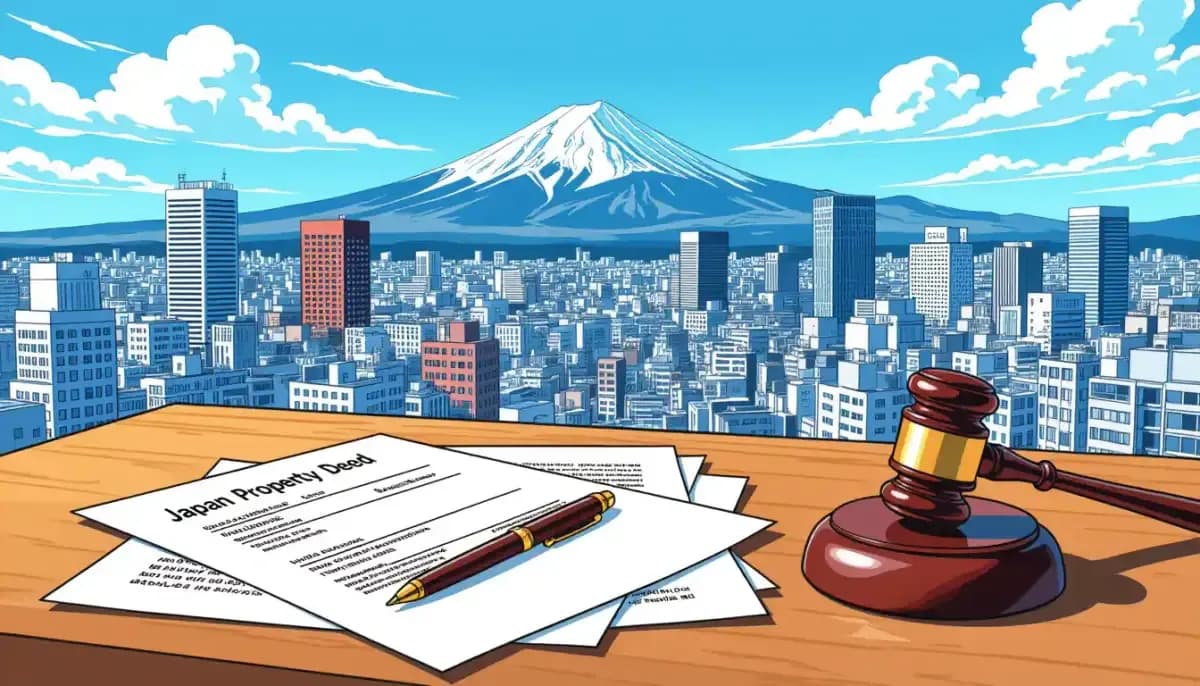
Complete guide to Japan's property ownership legal changes for foreigners in 2024-2026: nationality disclosure, inheritance registration, domestic contact requirements, and what's coming in April 2026.
Japan Property Ownership Legal Changes and Updates for Foreigners (2024–2026)
Japan has long been one of the most foreigner-friendly real estate markets among developed nations. Foreign nationals can buy land and buildings outright, enjoy the same ownership rights as Japanese citizens, and face no residency or visa requirements just to make a purchase. However, 2024, 2025, and 2026 have brought a wave of meaningful legal changes — from mandatory inheritance registration to new nationality disclosure rules — that every foreign buyer must understand before closing a deal.
This guide covers everything you need to know about Japan's recent and upcoming property law changes, what they mean in practice, and how to stay compliant as a foreign property owner.
Why Japan Is Changing Its Property Laws
Japan's property laws have remained largely unchanged for decades, but a combination of factors has pushed the government to act:
- National security concerns: High-profile cases of foreign nationals purchasing land near military bases and sensitive government facilities prompted the Diet to pass new surveillance and oversight legislation.
- Rising foreign investment: By the first half of 2025, foreign buyers accounted for 7.5% of all new apartment purchases in Tokyo's six central wards — a notable uptick that drew political attention.
- Inheritance backlogs: Japan's aging population has led to a crisis of abandoned and unregistered inherited properties, known as akiya (空き家), which clog land registries and create legal uncertainty.
- Transparency demands: International pressure and domestic calls for greater visibility into who owns Japanese land have pushed policymakers toward disclosure requirements.
Despite these pressures, Japan's stated policy direction is transparency, not prohibition. The country is not moving toward banning foreign ownership — the changes are administrative and compliance-focused.
For a broader look at what it means to own property in Japan as a foreigner, see our complete guide to buying property in Japan and our article on legal rights for foreign buyers.
Key Legal Changes: 2022–2026 Timeline
| Year | Law / Regulation | What Changed |
|---|---|---|
| 2022 | Important Land Survey Act | Security surveillance zones near military/nuclear sites |
| April 2024 | Inheritance Registration Reform | Mandatory registration of inherited property; penalties for non-compliance |
| April 2024 | Domestic Contact Requirement | Foreign owners without Japanese address must register a domestic contact person |
| July 2025 | National Land Use Planning Act Amendment | Nationality disclosure required for large land transactions (2,000+ sqm) |
| From April 2026 | Property Registry Reform | All buyers must declare nationality during registration (passport required) |
| From April 2026 | Foreign Exchange Reporting Expansion | Non-residents must report residential-use purchases within 20 days, not just investment-use |
| Fiscal 2027 (planned) | Digital Agency Database | Government-wide nationality database linked to real estate registry |
The Important Land Survey Act (2022): Security Zones
The Important Land Survey Act (重要土地等調査法), enacted in 2022, was the first major post-war restriction touching on foreign property ownership. It created a system of surveillance zones — areas within approximately one kilometer of:
- Self-Defense Force bases
- Coast Guard facilities
- Nuclear power plants
- Designated critical infrastructure
Within these zones, the government can investigate land use and order owners to change how the property is used if it poses a security risk. Crucially, the law does not prohibit foreigners from buying land in these zones — it regulates use, not ownership.
What this means for foreign buyers:
- If you buy land near a military base, expect possible government inquiry into how you use it
- Selling or renting to third parties for certain uses could face restrictions
- The law applies equally to Japanese and foreign nationals, but foreign-owned land near sensitive sites is more likely to attract scrutiny
For a deeper look at legal documentation requirements, see our guide on legal procedures and documentation for Japan property purchases.
Mandatory Inheritance Registration (April 2024)
One of the most sweeping changes for all property owners — including foreigners — is the April 2024 reform making inheritance registration mandatory.
Before this reform, heirs could leave inherited property unregistered indefinitely, creating millions of properties with unclear ownership. The government estimates there are over 6 million akiya (abandoned homes) in Japan, many tied up in unresolved estates.
What changed:
- Heirs are now required to register inherited property within three years of becoming aware of the inheritance (or within three years of April 2024 for existing cases)
- Failure to register carries a penalty of up to 100,000 yen
- The requirement applies to all property owners, including non-resident foreigners who inherit Japanese real estate
Practical implications for foreign owners:
- If you already own property in Japan and pass away, your heirs — wherever they live — must register within three years
- Non-resident heirs must typically obtain an affidavit from their home country's embassy, translated into Japanese, to complete registration
- Engaging a Japanese shiho shoshi (judicial scrivener) early in the estate process is strongly recommended
Domestic Contact Person Requirement (April 2024)
Alongside the inheritance reform, April 2024 brought in a requirement for foreign property owners without a Japanese address to designate a domestic contact person (国内連絡先) on property registration records.
This applies to:
- New purchases by non-residents
- Existing non-resident foreign owners (who may need to update their records)
The domestic contact person acts as a point of contact for the Japanese government and courts for issues related to the property. They do not need to hold any legal authority over the property — they are simply a reachable address. Options include:
- A Japanese friend or family member
- A professional representative (lawyer, judicial scrivener, real estate agent)
- A registered company with a Japan address
For context on how visa and residency status intersects with property ownership, see our guide on visa and residency considerations for property buyers.
Nationality Disclosure for Large Land Transactions (July 2025)
From July 1, 2025, an amendment to the National Land Use Planning Act (国土利用計画法) requires buyers to disclose their nationality when purchasing large tracts of land. Specifically:
- Threshold: Land transactions involving 2,000 square meters or more in urbanized areas (市街化区域内)
- Requirement: Buyers must state their nationality in the transaction notification submitted to local authorities
- Purpose: To give the government visibility into land concentration by foreign nationals in urban areas
This requirement primarily affects large commercial and development-scale purchases — it does not apply to typical apartment, condominium, or single-family home purchases, which are generally far below the 2,000 sqm threshold.
Nationality Declaration for All Property Registration (From April 2026)
The most significant and widely applicable upcoming change is the mandatory nationality declaration in property registration, announced by Justice Minister Hiroshi Hiraguchi in December 2025 and planned for fiscal year 2026 (starting April 2026).
What it requires:
- All property buyers — Japanese and foreign — must state their nationality on the registration application form
- Foreign nationals must attach a supporting document: a copy of their passport or residence certificate
- The nationality information will be recorded in the government's internal registry
What it does NOT mean:
- Nationality information will not appear on publicly accessible real estate registry certificates
- Disclosure is not a prerequisite for completing a purchase — it is an administrative filing requirement
- Japan is not banning or restricting foreign purchases
Scale of the market: According to government data, in fiscal year 2024, 3.1% of 113,827 total property acquisitions were made by foreign nationals and companies — a small but growing share that the government wants better data on.
For buyers navigating all the steps involved, our step-by-step home buying process guide covers the full transaction workflow.
For additional guidance on Japan's property laws and what these changes mean for foreigners, Living in Nihon's property and mortgage guide provides a useful overview of the overall buying process alongside the legal framework.
Expanded Foreign Exchange Reporting (From April 2026)
Under the Foreign Exchange and Foreign Trade Act (外国為替及び外国貿易法), non-resident foreign buyers have long been required to file a notification with Japan's Ministry of Finance within 20 days of acquisition when purchasing property for investment purposes.
From April 2026, this reporting obligation is expanding to cover residential-use purchases as well. Non-resident foreigners buying property to live in (not just to rent out or hold as an investment) will also need to file the notification.
Practically, this means:
- The 20-day notification requirement now captures virtually all non-resident foreign property purchases
- Failing to file — or filing late — can result in penalties
- Non-resident buyers should work with a shiho shoshi or tax advisor to ensure timely compliance
For more on the financial and tax obligations tied to Japanese property ownership, see our guides on property taxes and annual costs and hidden costs and fees when buying property in Japan.
Japan vs. Other Countries: How Open Is the Market?
One reason foreign buyers sometimes worry about these new rules is the experience of seeing other countries impose outright bans or severe restrictions. Japan's approach is markedly different:
| Country | Policy on Foreign Land Ownership |
|---|---|
| Japan | Full ownership allowed; new disclosure requirements only |
| Australia | Foreigners generally limited to new builds; FIRB approval required |
| Canada | Temporary ban on non-resident purchases (2023–2027) |
| Thailand | Foreigners cannot own land (condominiums only) |
| New Zealand | Ban on non-resident foreign buyers since 2018 |
| Germany | Full ownership allowed; minimal restrictions |
| South Korea | Full ownership allowed; reciprocity principle applies |
Japan continues to stand out as among the most open major economies for foreign real estate investment. The trajectory of reforms confirms this: the government is building transparency infrastructure, not erecting barriers.
For more on Japan's broader real estate environment, see our Japan real estate market overview and trends and For Work in Japan's housing infrastructure guide.
Who Is Buying? Foreign Ownership Data
New nationality disclosure requirements stem partly from the government's desire to better understand the composition of foreign ownership. Here is what existing data shows:
- 3.1% of all Japanese property acquisitions in fiscal 2024 involved foreign nationals or foreign-owned companies (out of 113,827 total transactions)
- 7.5% of new apartments in Tokyo's six central wards were purchased by individuals residing outside Japan in H1 2025
- Among purchases near "important facilities" (security-sensitive sites), Chinese nationals accounted for 47.5% of foreign buyer transactions, followed by Taiwanese at 11.7% and South Koreans at 10.7%
These numbers are small in absolute terms but politically significant, particularly the concentration near sensitive sites — which is the main driver of continued legislative attention.
Practical Compliance Checklist for Foreign Buyers (2026 and Beyond)
Whether you are buying your first Japanese property or managing an existing portfolio, here is what to keep track of:
- [ ] At purchase (non-resident): File Ministry of Finance notification within 20 days of signing (now covers both investment and residential use)
- [ ] At registration: Provide nationality declaration and passport copy (required from April 2026)
- [ ] If no Japanese address: Designate a domestic contact person on registration records
- [ ] For large land (2,000+ sqm urban): Include nationality in National Land Use Planning Act notification
- [ ] On inheritance: Register inherited property within three years; engage a shiho shoshi for non-resident estates
- [ ] Annually: Pay fixed asset tax (kotei shisanzei) and urban planning tax (toshi keikaku zei); non-residents appoint a tax representative
For a comprehensive view of what professional legal support looks like for foreign buyers, Gaijin Buy House's legal regulations guide is an excellent resource covering both current rules and evolving requirements.
What to Watch: Upcoming Policy Decisions
The Japanese government has signaled further policy reviews in the coming fiscal years:
- Fiscal 2027 Digital Database: The Digital Agency plans to establish a government-wide nationality database linked to the real estate registry, enabling cross-agency tracking of foreign ownership patterns.
- Comparative Law Review: In October 2025, the government launched a study comparing foreign property ownership regimes in Canada, Germany, South Korea, and Taiwan — with findings expected to inform possible further legislation.
- Possible Use Restrictions (Not Ownership Bans): Policy experts consulted by The Japan Times have recommended the government focus on regulating land use (particularly near sensitive sites) rather than restricting ownership by nationality — a distinction that points toward targeted restrictions rather than broad bans.
For the latest market intelligence and city-specific guidance, explore our regional guides: buying property in Tokyo, buying property in Osaka, and buying property in Kyoto.
Conclusion
Japan's property laws are evolving, but the direction is unmistakably toward greater transparency rather than restriction. The reforms of 2024–2026 — mandatory inheritance registration, domestic contact requirements, nationality disclosure at registration, and expanded foreign exchange reporting — add administrative obligations for foreign buyers without limiting their fundamental right to own Japanese real estate.
For foreigners buying or holding property in Japan, the key takeaway is: stay compliant, work with qualified professionals, and don't mistake paperwork requirements for ownership restrictions. Japan remains one of the world's most welcoming real estate markets for international buyers, and that is unlikely to change.
For additional background reading, The Japan Times' reporting on foreigners and land registration and The Real Deal's analysis provide authoritative overviews of the 2026 nationality requirement.
This article is for informational purposes only and does not constitute legal advice. Property laws change frequently — consult a licensed Japanese lawyer or judicial scrivener before making investment decisions.

Originally from Vietnam, living in Japan for 16+ years. Graduated from Nagoya University, with 11 years of professional experience at Japanese and international companies. Sharing information about buying property in Japan for foreigners.
View Profile →Related Articles

Condominium Purchase Restrictions for Foreigners in Japan
Understand condominium purchase restrictions for foreigners in Japan — from building-level 'gaijin bans' and HOA rules to mortgage barriers and new 2025-2026 nationality declaration requirements. Complete guide for foreign buyers.
Read more →
Chinese Citizens Buying Property in Japan: Rules and Process
Complete guide for Chinese nationals buying property in Japan. Learn the rules, step-by-step purchase process, mortgage options, taxes, and 2025-2026 regulatory changes for Chinese buyers.
Read more →
Europeans Buying Property in Japan: What to Know
A complete guide for Europeans buying property in Japan. Learn the legal process, mortgage options, taxes, documentation, and key tips for EU/EEA nationals purchasing Japanese real estate.
Read more →
Americans Buying Property in Japan: Complete Legal Guide
Complete guide for Americans buying property in Japan: legal rights, step-by-step process, financing options, Japanese taxes, and mandatory US tax reporting obligations.
Read more →
Buying Property in Japan Without a Visa: What Is Possible?
Yes, foreigners can buy property in Japan without a visa or residency — but it does NOT grant you the right to live there. Learn what's required, what's restricted, and how non-residents successfully complete purchases.
Read more →
Foreign vs Japanese National Property Rights Comparison
Do foreigners have the same property rights as Japanese nationals in Japan? Full comparison of legal rights, mortgage access, documentation requirements, and 2025-2026 regulatory changes.
Read more →