
Cross-Border Inheritance Issues for Japan Property Owners

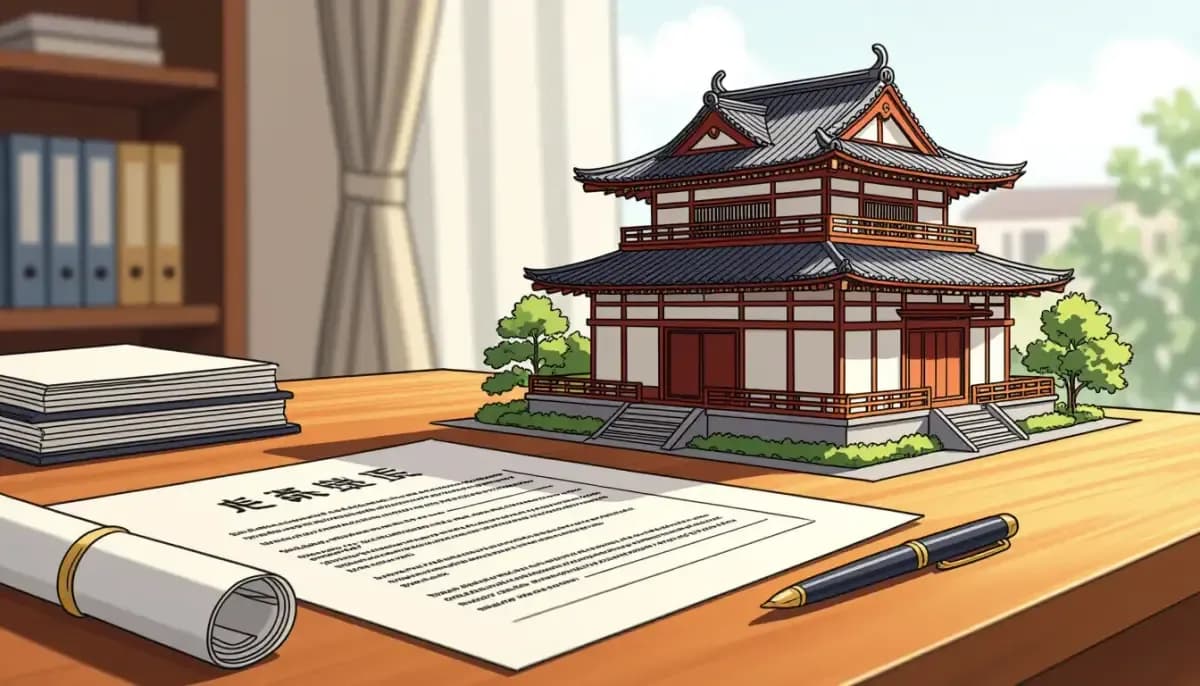
A complete guide to cross-border inheritance for Japan property owners. Learn about Japanese inheritance tax rates, filing deadlines, required documents, double taxation treaties, and estate planning strategies for foreign heirs.
Cross-Border Inheritance Issues for Japan Property Owners
Owning property in Japan as a foreigner can be a rewarding investment — but when it comes time to pass that property on to heirs, the legal and tax landscape becomes significantly more complex. Japan's inheritance system is governed by strict domestic laws that apply regardless of your nationality, and the intersection of Japanese law with foreign legal systems creates a range of challenges that every foreign property owner should understand.
Whether you are a foreign national who has purchased a home in Japan, a Japanese citizen living abroad, or an heir living outside Japan who stands to inherit Japanese real estate, this guide walks you through the critical cross-border issues you need to know — from governing law and tax obligations to documentation requirements and practical planning strategies.
How Japanese Inheritance Law Applies to Foreign Property Owners
One of the most important principles in Japanese inheritance law is that real property located in Japan is governed exclusively by Japanese law, regardless of the nationality of the deceased or the heir. This is sometimes called the lex situs rule, and it means that even if you hold dual citizenship or have a valid will drafted under the laws of another country, Japanese courts and registries will apply Japanese law to your Japanese real estate.
Japan's Civil Code divides statutory heirs into two main categories: spouses (who always inherit) and blood relatives in order of priority: children, parents, and siblings. Japan also maintains forced heirship rules (遺留分, iryūbun), which guarantee certain minimum shares to close relatives. If a foreign will attempts to disinherit a spouse or child entirely, Japanese courts may still award that heir their legally protected share from any Japanese property.
A key practical implication: if you own property in Japan and have a will prepared in your home country, that will may not fully protect your wishes regarding your Japanese assets. Consulting a Japanese attorney to draft a Japan-compliant supplementary will is strongly recommended.
For a broader overview of the legal side of property ownership in Japan, see our guide on Legal Procedures and Documentation for Japan Property Purchase.
Japan Inheritance Tax: Rates, Thresholds, and Who Must Pay
Japan's inheritance tax (sōzokuzei) is among the highest in the world, with a progressive rate structure that starts at 10% and reaches up to 55% for large estates. Understanding whether you or your heirs are liable — and on which assets — is essential planning.
Tax Rates Table
| Taxable Amount (per heir) | Tax Rate | Deduction |
|---|---|---|
| Up to ¥10 million | 10% | — |
| ¥10M – ¥30M | 15% | ¥500,000 |
| ¥30M – ¥50M | 20% | ¥2,000,000 |
| ¥50M – ¥100M | 30% | ¥7,000,000 |
| ¥100M – ¥200M | 40% | ¥17,000,000 |
| ¥200M – ¥300M | 45% | ¥27,000,000 |
| ¥300M – ¥600M | 50% | ¥42,000,000 |
| Over ¥600 million | 55% | ¥72,000,000 |
Basic Exemption
Before tax rates apply, every estate benefits from a basic exemption of ¥30 million + (¥6 million × number of statutory heirs). For example, if there are three statutory heirs, the exemption is ¥48 million. Estates below this threshold owe no inheritance tax.
Residency and Visa Status Determine Your Tax Scope
Japan's tax rules for foreigners hinge heavily on visa category and years of residency:
- Table 2 visa holders (permanent residents, long-term residents, spouse or child of a Japanese national or permanent resident) are treated similarly to Japanese nationals. They must pay inheritance tax on worldwide assets, regardless of how long they have lived in Japan.
- Table 1 visa holders (most work visas, student visas, etc.) are exempt from Japanese inheritance tax on overseas assets if they have lived in Japan for less than 10 years in the previous 15 years.
- If a Table 1 visa holder crosses the 10-year threshold, they become taxable on worldwide assets.
This distinction matters enormously for long-term foreign residents, who may be surprised to find that their entire global estate — not just their Japanese property — could be subject to Japanese inheritance tax.
For more on how visa status affects property ownership, see Visa and Residency Considerations for Property Buyers in Japan.
The 10-Month Filing Deadline and Consequences of Missing It
Inheritance tax must be filed and paid within 10 months of the date of death. This is an absolute deadline with no extensions under most circumstances.
For cross-border situations, this timeline creates real pressure. Heirs living abroad must:
- Obtain and translate the death certificate into Japanese
- Gather documents on all Japanese and overseas assets
- Have a Japanese tax accountant (zeirishi) prepare the return
- Arrange funds to pay — sometimes requiring the sale of assets
Missing the deadline does not mean you avoid tax. Late filing incurs additional penalties of 15–20% on underpaid tax, plus interest charges. If no return is filed at all, the tax authority can assess a higher "unapproved" rate.
Engaging a qualified Japanese inheritance specialist as soon as a death occurs is critical to meeting this deadline.
Required Documents for Cross-Border Inheritance
Inheriting Japanese property from abroad involves a substantial paperwork burden. Japanese legal offices and the Legal Affairs Bureau (法務局) have specific requirements that can be difficult to satisfy remotely.
Standard Documents Required
- Death certificate of the deceased, officially translated into Japanese
- Family registry (koseki) tracing the family lineage to establish heirship
- Inheritance division agreement (遺産分割協議書) signed by all heirs
- Seal certificates (印鑑登録証明書) for each heir, or notarized equivalents for overseas heirs
- Property registration documents for all Japanese real estate
- Asset valuations for all taxable property
Foreign Document Authentication
Any document issued outside Japan must be apostilled under the Hague Convention (if the country is a signatory) or certified by the Japanese consulate in the country of origin. Japanese institutions will not accept unauthenticated foreign documents.
For heirs based in countries that are not Hague Convention signatories, the process of authenticating documents through the Japanese consulate can take several weeks. Plan accordingly and start early.
Additionally, if the estate includes international bank transfers, amounts exceeding ¥30 million must be reported to Japan's central bank (Bank of Japan) under foreign exchange reporting rules.
Compulsory Inheritance Registration: The 3-Year Rule
Since April 2024, Japan has made inheritance registration of real estate compulsory. Heirs who inherit Japanese property must register the ownership change at the Legal Affairs Bureau within 3 years of learning of the inheritance (or within 3 years of the law's enforcement, whichever is later).
Failure to register can result in fines of up to ¥100,000 per property. This rule was introduced to address the growing problem of "unknown owner" properties in Japan — real estate where title has never been formally transferred after deaths, making it impossible to sell, develop, or even maintain the properties.
For foreign heirs living abroad, complying with this rule typically requires:
- Engaging a Japanese judicial scrivener (shihō shoshi) or attorney to handle the registration
- Appointing a representative in Japan if you cannot appear in person
- Obtaining a Power of Attorney (PoA) document, apostilled in your home country
This compulsory registration rule is one of the most significant recent changes to Japanese property law and directly affects foreign heirs who might otherwise delay formalizing ownership.
Double Taxation: Japan's Treaty Network and Foreign Tax Credits
One concern for many foreign heirs is whether they will be taxed twice on the same inherited assets — once in Japan and once in their home country.
Japan has established tax treaties with over 156 countries and regions, many of which include provisions to prevent double taxation on inheritances or estates. The most well-known is the US-Japan Estate Tax Treaty, which provides credits and protections for American heirs inheriting Japanese property. For more detail on utilizing Japan's tax treaty network, see Japan's Tax Treaty Guide for Foreign Workers.
Even without a specific inheritance treaty, Japan's domestic law allows a foreign tax credit: if you pay inheritance tax on the same assets in another country, you can deduct a portion of that foreign tax from your Japanese liability.
However, treaty provisions vary significantly. American heirs benefit from robust US-Japan treaty protections. UK heirs have fewer specific protections. Citizens of countries with no treaty at all face the greatest risk of genuine double taxation.
Recommendation: Before assuming a treaty applies, consult a cross-border tax specialist who understands both Japanese law and your home country's estate tax rules.
For an excellent overview from an investor's perspective, see What to Know When Leaving Japan: Sell vs. Rent Your Property from Gaijin Buy House.
Estate Planning Strategies for Foreign Property Owners in Japan
Proactive planning can significantly reduce the tax burden and administrative complexity for your heirs. Here are the most effective strategies used by foreign property owners in Japan:
1. Draft a Japan-Compliant Will
A will (yuigon) legally valid in Japan dramatically simplifies the inheritance process. Without a will, all heirs must agree on an inheritance division — a process that can take months or even years, especially when heirs are scattered across different countries. A Japan-compliant will prepared with a local attorney can:
- Designate specific heirs for specific assets
- Appoint an executor (yuigon shikkōsha) based in Japan
- Reduce conflicts between heirs in different countries
Note that the will must respect Japan's forced heirship provisions to be fully enforced.
2. Leverage the Lower Assessed Value of Real Estate
Japanese real estate is assessed at below market value for inheritance tax purposes. Residential land is typically assessed at 80% of its published road value (路線価), and building value is depreciated over time. This can make holding Japanese real estate a relatively tax-efficient component of a cross-border estate.
3. Use Life Insurance for Liquidity
Japan's inheritance tax law provides a special ¥5 million per statutory heir exemption for life insurance proceeds. Structuring a life insurance policy with beneficiaries named can provide tax-free funds that heirs can use to pay inheritance tax, without needing to sell the property under time pressure.
4. Appoint a Japanese Tax Representative
If you expect your heirs to be based overseas, it is worth designating a tax representative (納税管理人) in Japan in advance. This person will receive tax notices and can act on behalf of overseas heirs — a requirement for non-residents dealing with Japanese tax authorities.
For an introduction to the broader costs of owning property in Japan, see Property Taxes and Annual Costs of Owning Property in Japan.
When Heirs Cannot Agree: Dispute Resolution
Cross-border inheritance disputes are more common than many expect. When heirs from multiple countries disagree on how to divide an estate that includes Japanese real estate, the process becomes complex:
- Negotiation among all heirs to reach an inheritance division agreement (遺産分割協議書)
- Family Court Mediation (家庭裁判所調停) if heirs cannot agree voluntarily
- Judicial Adjudication if mediation fails — the family court issues a binding decision
For foreign heirs, participating in Japanese family court proceedings from abroad requires legal representation. The process can take 1–3 years if genuinely contested.
Additionally, Japan's 3-month window from learning of the inheritance allows heirs to renounce their inheritance if the estate's debts exceed its assets. This is a valuable protection — especially for foreign heirs who may inherit a property with outstanding mortgage debt or unpaid property taxes.
For a comprehensive picture of the inheritance and estate planning landscape for foreigners, Living in Nihon's expat resource hub provides helpful context for foreigners navigating life and property ownership in Japan.
Summary: Key Deadlines and Action Items
| Deadline | Action Required |
|---|---|
| Within 3 months of death | Decide whether to accept or renounce inheritance |
| Within 10 months of death | File and pay inheritance tax |
| Within 3 years of learning of inheritance | Register property transfer at Legal Affairs Bureau |
| Before receiving any income | File tax treaty notification forms if applicable |
Top priority actions for foreign property owners:
- Draft a Japan-compliant will with a local attorney
- Identify and brief a Japanese executor or representative
- Ensure your heirs know where all documents and assets are located
- Consult a cross-border tax specialist to map your treaty protections
- Review your life insurance coverage for inheritance tax liquidity
Cross-border inheritance involving Japanese property is one of the most legally complex situations a foreign property owner can face. With the right preparation and professional support, however, it is entirely manageable — and planning ahead protects both your assets and your heirs.
For a full guide to owning property in Japan as a foreigner, visit our Complete Guide to Buying Property in Japan as a Foreigner.
Sources and further reading:

Originally from Vietnam, living in Japan for 16+ years. Graduated from Nagoya University, with 11 years of professional experience at Japanese and international companies. Sharing information about buying property in Japan for foreigners.
View Profile →Related Articles

Foreign Heir Inheriting Japan Property: Complete Process Guide
Complete guide for foreign heirs inheriting Japan property: legal process, required documents, inheritance tax rules, mandatory 2024 registration law, and step-by-step instructions for overseas heirs.
Read more →
Inheritance Tax Exemptions and Deductions for Japan Property
Complete guide to inheritance tax exemptions and deductions for Japan property owners. Learn about the basic exemption, spousal credit, property valuation discounts, and rules for foreign nationals.
Read more →
Japan Property Succession Through Family Trust
Learn how Japan's family trust (民事信託) protects your property from dementia and simplifies inheritance. A complete guide for foreign property owners on succession planning, tax implications, and setup steps.
Read more →
Japan Inheritance Tax Payment Methods and Deadlines
Learn about Japan inheritance tax payment methods including lump-sum, installment (延納), and in-kind (物納) options. Understand the strict 10-month deadline, penalties for late payment, and special rules for foreign nationals and non-residents.
Read more →
How to Calculate Japan Inheritance Tax on Property
Learn exactly how to calculate Japan inheritance tax on property step by step — from basic deductions and Rosenka valuations to progressive tax rates and credits for foreign heirs.
Read more →
Trust Structures for Japan Property Management and Succession
Learn how to use trust structures (kazoku shintaku) in Japan to manage and pass on property as a foreigner. Covers family trusts, inheritance tax, 2024 law changes, and setup steps.
Read more →