
Japan Property Tax Reductions and Exemptions Guide

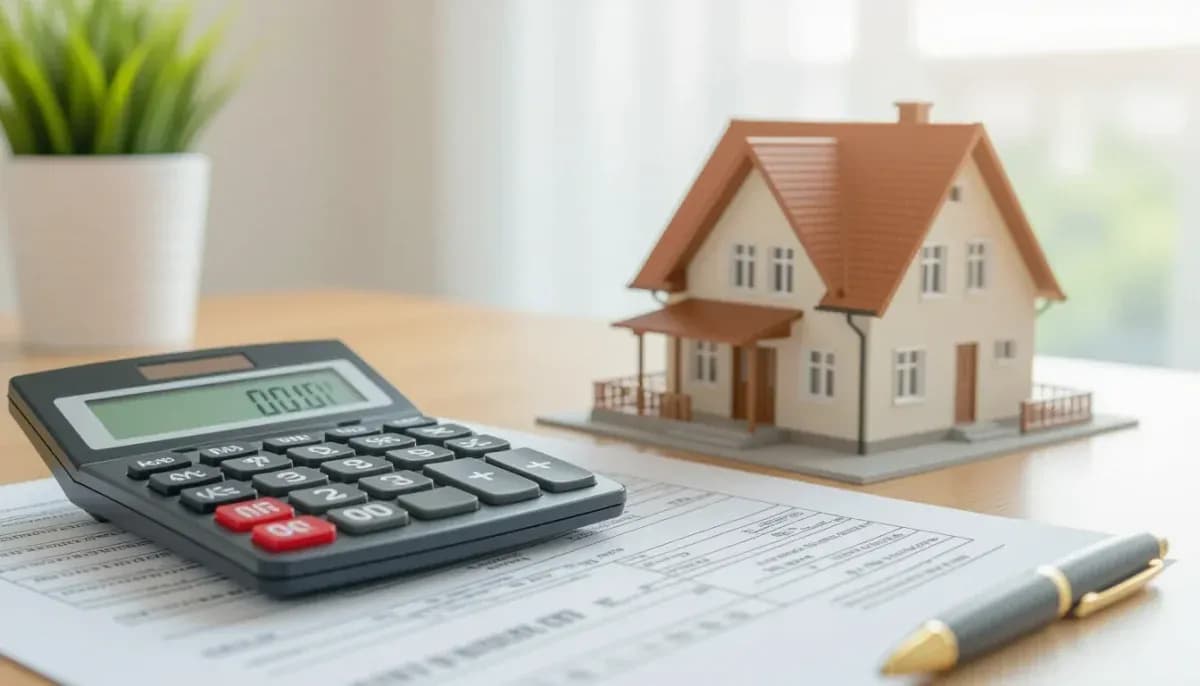
Complete guide to Japan property tax reductions and exemptions for foreign buyers. Learn about fixed asset tax cuts, new home exemptions, acquisition tax deductions, and capital gains relief.
Japan Property Tax Reductions and Exemptions Guide
Owning property in Japan comes with annual tax obligations — but also a surprisingly generous set of reductions and exemptions that can significantly lower your bill. Whether you just purchased your first Japanese home or are considering a real estate investment, understanding these tax breaks is essential to managing your long-term costs.
This guide covers every major reduction and exemption available on Japan property taxes, who qualifies, how to apply, and what foreign buyers need to know specifically.
Understanding Japan's Core Property Taxes
Before diving into reductions, it helps to know what taxes are actually involved. Japan has two main ongoing property taxes paid annually:
Fixed Asset Tax (固定資産税 / Kotei Shisan-zei) This is the primary annual property tax, calculated at a standard rate of 1.4% of the officially assessed value. The assessment is made as of January 1 each year, and bills are sent to property owners in April or May. You can pay in one lump sum or spread across four installments.
City Planning Tax (都市計画税 / Toshi Keikaku-zei) Applicable in urbanization promotion areas, this tax adds up to 0.3% of assessed value on top of the fixed asset tax. Not all properties are subject to it — rural and non-urban properties are typically exempt.
In addition to these annual taxes, there are also one-time taxes paid at the time of purchase:
- Real Estate Acquisition Tax (不動産取得税) — paid once when buying
- Registration and License Tax (登録免許税) — paid at registration
- Stamp Duty (印紙税) — paid when signing the purchase contract
Understanding all these taxes — and their reductions — is key to accurate cost planning. For a broader overview of all costs involved, see our guide on property taxes and annual costs of owning property in Japan.
Fixed Asset Tax Reductions for Residential Land
One of the most impactful tax breaks in Japan applies to land with residential buildings on it. The government offers a substantial reduction on the assessed land value used for calculating fixed asset tax.
Small Residential Lot Reduction (住宅用地の特例)
| Land Portion | Assessed Value for Tax | Effective Reduction |
|---|---|---|
| Up to 200 sqm (small residential lot) | Reduced to 1/6 of assessed value | ~83% reduction |
| Above 200 sqm (general residential lot) | Reduced to 1/3 of assessed value | ~67% reduction |
This reduction is automatic — you do not need to apply separately. As long as the land is used for residential purposes with a qualifying structure on it, the municipality applies this calculation. For example, if your land is assessed at ¥30,000,000 and is under 200 sqm, only ¥5,000,000 (1/6) is used to calculate your actual fixed asset tax.
The same proportional reductions apply to city planning tax: small residential lots are taxed on 1/3 of assessed value (rather than 1/6 for fixed asset tax), and general residential lots on 2/3.
What Qualifies as Residential Use?
The land must have a residential building covering a minimum floor area relative to the land. Properties used exclusively for commercial purposes or vacant lots do not qualify for this residential land reduction. For more details on property types and their tax implications, visit our types of properties in Japan guide.
New Building Fixed Asset Tax Exemptions
When you buy or build a new home in Japan, the building portion of your fixed asset tax is eligible for a major time-limited reduction.
Standard New Home Reduction
For newly constructed residential buildings registered after the relevant date and meeting the criteria below, the building's fixed asset tax is halved for the first years of ownership:
| Property Type | Reduction Period |
|---|---|
| Newly built detached house (ikkodate) | 50% reduction for first 3 years |
| Newly built condominium (mansion) | 50% reduction for first 5 years |
| Long-term superior housing (detached) | 50% reduction for first 5 years |
| Long-term superior housing (condo) | 50% reduction for first 7 years |
Eligibility conditions:
- Total floor area must be between 50 sqm and 240 sqm (for rentals: 40 sqm minimum)
- The property must be used as a primary residence
- The building must be newly constructed (not used)
This reduction applies to the building only — not the land portion. However, combined with the residential land reduction above, new homeowners can see dramatically reduced first-year tax bills.
Long-Term Superior Housing (長期優良住宅)
Homes certified as "long-term superior housing" (chouki yuryo jutaku) must meet strict standards for durability, seismic resistance, energy efficiency, and maintainability. The reward is an extended tax reduction period (5 and 7 years as shown above), plus preferential treatment on acquisition tax and mortgage interest deductions.
For guidance on new vs. used property decisions including tax implications, see our new construction vs used properties guide.
Real Estate Acquisition Tax Reductions
The real estate acquisition tax is a one-time tax due when you acquire property. Standard rates are 4%, but residential properties benefit from significantly reduced rates.
Current Reduced Rates (Valid Until March 31, 2027)
| Property Type | Standard Rate | Reduced Rate |
|---|---|---|
| Residential land | 4% | 3% |
| Residential building | 4% | 3% |
| Non-residential property | 4% | 4% (no reduction) |
Beyond the rate reduction, there are further deductions on the assessed taxable value:
For new residential buildings:
- General new homes: ¥12,000,000 deducted from assessed value before calculating tax
- Long-term superior housing (acquired by March 31, 2026): ¥13,000,000 deducted
For existing residential buildings:
- A deduction based on the year the building was constructed applies, scaled by age
- Buildings constructed before 1982 may face additional scrutiny for seismic compliance
For land purchases linked to a residential building:
- The acquisition tax on land may be reduced by the larger of: ¥45,000, or the amount calculated as (building acquisition tax deduction ÷ floor area of building × 200 sqm)
These deductions often reduce the acquisition tax to near zero for modest residential purchases.
Registration Tax and Stamp Duty Reductions
These one-time taxes at the time of purchase also benefit from current government incentives.
Registration and License Tax (登録免許税)
| Transaction Type | Normal Rate | Current Reduced Rate | Valid Until |
|---|---|---|---|
| Land ownership transfer | 2% | 1.5% | March 31, 2026 |
| New building ownership transfer | 2% | 0.1% – 0.3% | March 31, 2027 |
| Mortgage (hypothec) registration | 0.4% | 0.1% | March 31, 2025 |
Note: Mortgage registration rates may have been updated — confirm the latest with your legal representative or judicial scrivener (shiho-shoshi).
Stamp Duty (印紙税)
Stamp duty on real estate purchase contracts is currently halved from standard rates through 2027. For a property valued between ¥10 million and ¥50 million, the reduced stamp duty is ¥16,000 (standard: ¥32,000). The savings are modest but meaningful when factoring total closing costs.
For a comprehensive breakdown of all fees at purchase time, see our hidden costs and fees when buying property in Japan guide.
Capital Gains Tax Exemptions on Sale
When you eventually sell your Japanese property, capital gains tax may apply. But primary residence sellers benefit from a significant exemption.
¥30 Million Special Deduction
If you lived in the property as your primary residence, the first ¥30,000,000 (¥30 million) of profit is exempt from capital gains tax. This applies regardless of nationality, as long as the residency requirement is met.
Capital gains tax rates by holding period:
| Holding Period | Income Tax Rate | Residence Tax | Total Rate |
|---|---|---|---|
| 5 years or less (short-term) | 30% | 9% | 39% |
| More than 5 years (long-term) | 15% | 5% | 20% |
| More than 10 years (primary residence) | 10% (first ¥60M) | 4% | 14% (partial) |
The 10-year reduced rate applies only to the portion up to ¥60 million in gains, and only if the property was your primary residence for at least 10 years. This is a powerful incentive to hold owner-occupied property long-term.
Non-residents selling Japanese property face a withholding tax: 10.21% of the total sale proceeds (not just profit) is withheld by the buyer unless the sale is under ¥100 million to an individual owner-occupant. Residents can reclaim overpaid withholding at year-end via a tax return.
Special Exemptions: Renovation, Seismic, and Energy Efficiency
The Japanese government also offers property tax reductions for specific renovations that improve safety or energy performance.
Earthquake-Resistant Renovation (耐震改修)
For properties built before 1981 (pre-current seismic code), completing seismic retrofitting may qualify for:
- 50% reduction on fixed asset tax for one year (houses up to 120 sqm of floor area)
- Must be completed with certified contractors using approved methods
- Submit proof to your local municipality within 3 months of renovation completion
Barrier-Free Renovation (バリアフリー改修)
Homes renovated for accessibility (ramps, handrails, widened doorways) may qualify for:
- 1/3 reduction on fixed asset tax for one year (100 sqm portion)
- Occupant must be 65 or older, or a person with disabilities, or receive care insurance services
Energy Efficiency Renovation (省エネ改修)
Installing insulation, efficient heating systems, or solar panels may qualify for:
- 1/3 reduction on fixed asset tax for one year (120 sqm portion)
- Must meet Ministry of Land, Infrastructure, Transport and Tourism (MLIT) standards
These renovation-related reductions require application to your local municipal tax office before or shortly after the renovation is completed. Keep all receipts and construction certificates.
What Foreign Buyers Need to Know
Japan does not restrict foreigners from owning property or accessing these tax reductions. You qualify for all the reductions and exemptions described above on equal terms with Japanese citizens — what matters is how the property is used, not who owns it.
However, there are practical considerations for non-resident foreign owners:
Tax Agent Requirement for Non-Residents
If you do not have a registered address in Japan, you must designate a Tax Agent (納税管理人 / Nōzei Kanrinin). This person receives tax notices on your behalf and can make payments. Your tax agent can be:
- A Japanese accountant or tax professional
- A family member residing in Japan
- A property management company
You submit a "Notification of Tax Agent" (納税管理人申告書) to the municipal tax office that has jurisdiction over your property. This is required — failing to designate an agent can result in complications receiving tax notices and penalties.
Paying Fixed Asset Tax from Abroad
Non-resident owners can pay fixed asset tax through:
- International bank transfer through their tax agent
- Japanese bank account (kept active for this purpose)
- Property management companies that handle tax payments as part of their service
For guidance on managing Japanese property remotely, see our rental property investment guide for foreign landlords.
Residency Status and Deductions
Some deductions — particularly the ¥30 million capital gains exemption and the 10-year reduced capital gains rate — require residency in the property. Non-resident investors will not qualify for these personal residence deductions but are still eligible for business expense deductions on rental income.
For more on visa and residency considerations when buying property, see our visa and residency guide for property buyers.
How to Verify Your Assessments and File for Reductions
Fixed asset tax is based on assessed value set by the municipality, not market value. Assessments are revised every three years (next revision: 2027). Your assessment notice (課税明細書) itemizes the assessed value, applicable reductions, and final tax amount.
Steps to ensure you receive all applicable reductions:
- Check your assessment notice — confirm the residential land reduction (1/6 or 1/3) is applied
- Verify new home reduction — should be automatic for qualifying new builds; confirm with your realtor or builder
- Apply for renovation reductions — these require active application within the deadline (usually 3 months post-renovation)
- Review after major changes — additions, demolitions, or change of use can affect applicable reductions
If you believe your assessment is incorrect, you can file an objection with the Fixed Asset Tax Review Board (固定資産評価審査委員会) in your municipality within 3 months of the assessment notice date.
For a complete breakdown of the home buying process including tax timing, see our step-by-step home buying process guide.
Summary: Key Reductions at a Glance
| Tax | Reduction Available | Typical Saving |
|---|---|---|
| Fixed asset tax (land) | Assessed at 1/6 (under 200 sqm) | ~83% on land portion |
| Fixed asset tax (new building) | 50% for 3–7 years | Significant first years |
| Real estate acquisition tax | Rate 3% + ¥12M deduction | Often near zero |
| Registration tax (building) | 0.1%–0.3% vs normal 2% | 85–95% reduction |
| Capital gains (primary residence) | ¥30M exempt + long-term rates | Major savings on sale |
| Seismic/energy renovation | 1/3–1/2 reduction for 1 year | Situational |
Japan's property tax system is more favorable to homeowners than many people expect, especially for primary residences and new constructions. Taking full advantage of these reductions can save you hundreds of thousands of yen over your ownership period.
For more comprehensive guidance on buying property in Japan as a foreigner, explore our complete guide to buying property in Japan as a foreigner.
Additional Resources:

Originally from Vietnam, living in Japan for 16+ years. Graduated from Nagoya University, with 11 years of professional experience at Japanese and international companies. Sharing information about buying property in Japan for foreigners.
View Profile →Related Articles
Filing Tax Returns in Japan as a Foreign Property Owner
Complete guide to filing Japanese tax returns as a foreign property owner. Covers residency status, rental income tax rates (20.42%), capital gains, tax representatives, double taxation treaties, and step-by-step filing instructions.
Read more →
Tax Treaty Benefits for Foreign Property Owners in Japan
Learn how Japan's tax treaties protect foreign property owners from double taxation. Covers rental income, capital gains, how to claim treaty benefits, and non-resident rules.
Read more →
Japan Property Depreciation and Tax Benefits for Investors
Learn how Japan's property depreciation system works, how to calculate tax deductions, accelerated depreciation on used buildings, and strategies to maximize your investment returns as a foreign investor in Japan.
Read more →
Gift Tax on Japan Property Transfers Explained
Understand Japan's gift tax (zoyo zei) on property transfers. Covers tax rates up to 55%, key exemptions including the ¥30M housing deduction, visa status rules for expats, and how to file your return.
Read more →
Inheritance Tax on Japan Property for Foreign Nationals
Understand Japan's inheritance tax on property for foreign nationals: rates up to 55%, residency rules, property valuation discounts, exemptions, and estate planning strategies for expats.
Read more →
Capital Gains Tax on Japan Property Sales for Foreign Owners
Complete guide to capital gains tax on Japan property sales for foreign owners. Learn about tax rates (20.315% vs 39.63%), non-resident withholding rules, the ¥30M primary residence exemption, and how to minimize your tax bill.
Read more →