
Hyogo Rural Property: Mountain and Countryside Options

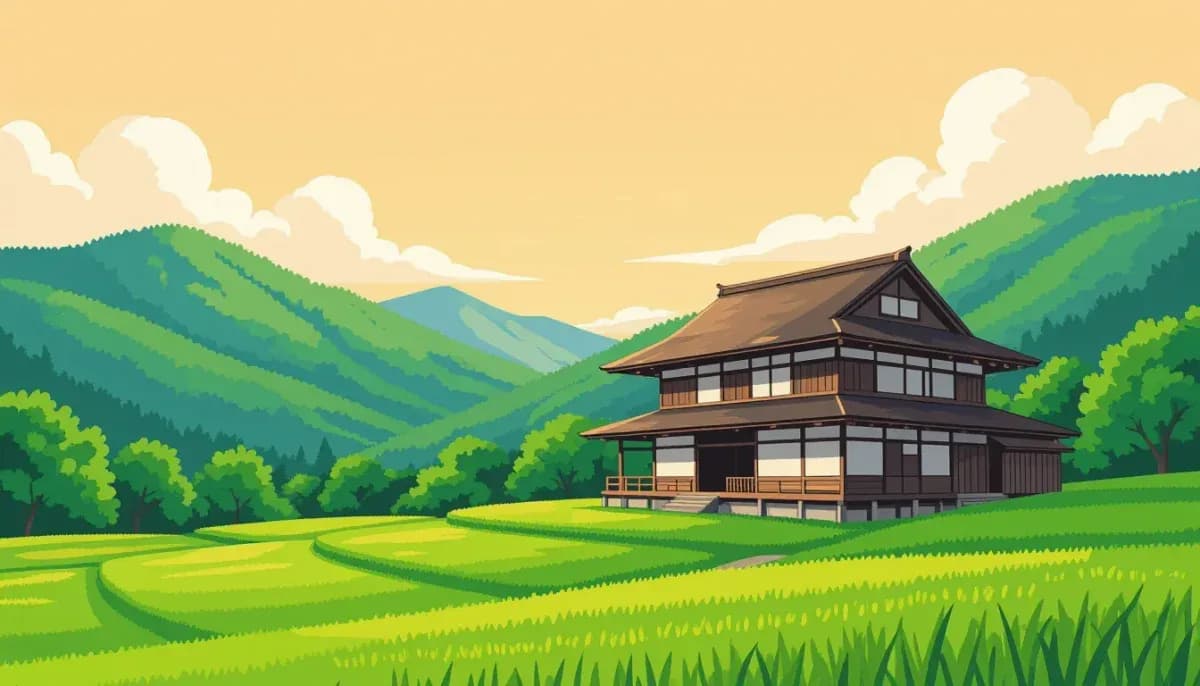
Discover rural property options in Hyogo Prefecture's mountains and countryside. Pricing from ¥380,000, key areas, akiya buying guide, and tips for foreign buyers in Japan.
Hyogo Rural Property: Mountain and Countryside Options for Foreign Buyers
Hyogo Prefecture offers some of the most compelling rural property opportunities in Japan for foreign buyers. Nestled between the mountains of the Chugoku and Kinki regions, Hyogo's countryside spans dramatic landscapes — from the forested peaks near the San'in coast to the gentle valleys of the Harima Plain. With Kobe and Osaka within easy reach, rural Hyogo strikes a rare balance: genuine countryside living without total isolation. If you are considering buying a mountain retreat or a traditional farmhouse in Japan, Hyogo deserves serious attention.
Why Hyogo's Rural Areas Appeal to Foreign Buyers
Hyogo ranks 7th among all Japanese prefectures by the number of vacant properties, with approximately 360,200 akiya (vacant houses) as of recent counts. That is a large inventory, and it translates to real purchasing opportunities at accessible price points. Unlike some rural prefectures where properties are truly remote, many rural Hyogo towns sit within one to two hours of Osaka or Kobe by train or car — making weekend use or hybrid remote-work lifestyles genuinely practical.
The prefecture's geography is remarkably diverse. Northern Hyogo (the San'in side) features rugged coastal mountains and traditional farming villages around Toyooka and Shin-onsen Town. Central Hyogo around the Harima region offers open countryside and agricultural land. Southern areas toward Himeji and Ako City blend accessible infrastructure with rural character. Whether you want a mountain hideaway with views, a working farm, or a renovated kominka (traditional farmhouse), Hyogo has options across all categories.
For more background on the legal framework before you start searching, read our complete guide to buying property in Japan as a foreigner and our overview of foreigner property ownership rights in Japan.
Key Rural Areas in Hyogo for Property Buyers
Understanding Hyogo's rural geography helps you focus your search. The prefecture is large — the fifth biggest in Japan by area — so knowing which sub-regions match your priorities saves considerable time.
Northern Hyogo: San'in Mountains and Coastal Villages
Northern Hyogo borders Tottori and Kyoto prefectures and forms part of the San'in Kinki National Park. The area around Shin-onsen Town (Mikata District) features historic hot spring villages, cedar forests, and farmhouses along mountain valleys. Toyooka City — known internationally for the reintroduction of Oriental white storks — has a strong rural identity and increasingly attracts foreign residents drawn by outdoor lifestyle. Expect cold winters with snow but spectacular seasonal scenery.
Central Hyogo: Harima and Mountain Valleys
The central interior includes Shiso City, Kamikawa Town (Kanzaki District), and Taka Town (Taka District). These areas sit in river valleys surrounded by mountains and were historically agricultural. Properties here tend to be spacious: land parcels of 500–1,975 sqm are common, and building footprints of 100–350 sqm are the norm. The train network is limited, so a car is essential, but national Route 29 connects the area to Himeji in about 45–60 minutes.
Southern Rural Hyogo: Harima Plain and Ako Region
The southern countryside around Kasai City and Kamigori Town (Ako District) offers more agricultural flatland. The Ako region, famous historically for salt production and the 47 Ronin story, has traditional machiya townhouses and rural estates alongside modern infrastructure. Properties here offer better transport links than the north and are popular with buyers who want rural character without complete remoteness.
Property Types and Pricing in Rural Hyogo
Rural Hyogo properties cover a wide spectrum. Current listings on akiya platforms show 291+ active properties across the prefecture, with prices ranging from approximately ¥380,000 to ¥17,000,000 (roughly $2,500–$115,000 USD at current exchange rates).
| Property Type | Typical Price Range (JPY) | Approx. USD | Key Features |
|---|---|---|---|
| Vacant akiya (unrestored) | ¥500,000 – ¥3,000,000 | $3,500 – $20,000 | Requires full renovation |
| Traditional kominka | ¥2,000,000 – ¥8,000,000 | $13,000 – $54,000 | 100+ year old farmhouse, large land |
| Partially renovated home | ¥5,000,000 – ¥12,000,000 | $34,000 – $81,000 | Move-in feasible, some updates done |
| Mountain resort property | ¥13,000,000 – ¥20,000,000+ | $88,000 – $135,000+ | Near ski/hiking areas, modern amenities |
| Agricultural land + house | ¥3,000,000 – ¥10,000,000 | $20,000 – $68,000 | Comes with rice fields or forest land |
Note that these prices reflect the purchase price only. Renovation costs for a traditional farmhouse typically run ¥7,500,000–¥15,000,000 ($50,000–$100,000 USD), and full modernization of a large kominka can exceed that significantly. Budget conservatively.
For details on ongoing ownership costs, see our article on fixed asset tax in Japan explained for foreigners.
Can Foreigners Buy Rural Property in Hyogo?
Yes — Japan imposes no restrictions on foreign ownership of property. There is no citizenship requirement, no residency requirement, and no visa requirement to purchase real estate. The transaction process for a foreigner is essentially identical to that for a Japanese citizen. You do not need to be living in Japan to complete the purchase, though having a local representative or bilingual agent simplifies the paperwork considerably.
One important distinction: akiya bank programs run by municipal governments sometimes prioritize applicants who already live in Japan or who commit to moving to the area. Commercial listings through real estate agencies have no such restrictions. If you are buying from overseas, focus on commercial listings initially. Once you establish residency, you can explore municipal akiya bank programs for additional opportunities.
You will need a judicial scrivener (shiho shoshi) to handle property registration. Their fees typically run ¥130,000–¥200,000 ($880–$1,350 USD). For a full breakdown of the buying process, read our complete guide to buying property in Japan as a foreigner.
For broader guidance on living in rural Japan, Living in Nihon offers practical articles covering everything from setting up utilities to navigating community life as a foreign resident. If you are planning to work remotely from your Hyogo property, For Work in Japan covers visa categories and work-from-Japan scenarios in useful detail.
Finding Rural Properties in Hyogo: Where to Search
Several platforms specifically aggregate rural and akiya listings:
- Akiyahopper — lists 291+ Hyogo properties with English interface, filterable by municipality
- Old Houses Japan — curated listings of traditional properties in Hyogo, with English descriptions and price history
- KORYOYA — specializes in traditional kominka and farmhouses across Japan including Hyogo
- Hyogo Prefecture Akiya Bank — official municipal database (Japanese only, but navigable with browser translation)
- Suumo and At Home — Japan's largest real estate portals; use the prefecture filter for rural Hyogo municipalities
When searching, use both Japanese and English terms. "空き家" (akiya) finds vacant houses; "古民家" (kominka) finds traditional farmhouses; "田舎物件" (inaka bukken) finds rural properties generally. Properties in the target municipalities — Shiso City, Kamikawa Town, Taka Town, Shin-onsen Town — are worth prioritizing for the combination of price and landscape.
For help finding a bilingual agent who handles rural transactions, see our guide on how to find a real estate agent in Japan as a foreigner.
Important Considerations Before Buying Rural Hyogo Property
Rural property purchases in Japan carry specific risks that urban purchases do not. Going in informed protects your investment.
Renovation requirements: Many akiya are in poor condition after years of vacancy. Standard issues include roof damage, termite infestation, deteriorating tatami and shoji screens, outdated electrical wiring (60A or less), and no modern insulation. A structural inspection (¥100,000–¥200,000) before committing is essential.
Agricultural land restrictions: Properties listed with farmland (nochi) attached may have restrictions under Japan's Agricultural Land Act. Transferring ownership of farmland to foreigners or non-farmers requires approval from the local agricultural committee. Residential land has no such restriction, but parcels with rice paddies or orchards attached need careful due diligence.
Depopulation and services: Some rural Hyogo municipalities are losing population steadily. Check whether your target area has functioning supermarkets, clinics, and schools (if relevant). Towns like Taka and Kamikawa are small; services are present but limited. Toyooka and Kasai City have better infrastructure.
Resale liquidity: Rural Japanese property is illiquid by nature. Treat a rural Hyogo purchase primarily as a place to live or enjoy, not as an investment for capital appreciation. In areas with strong tourism (like the San'in coast near Shin-onsen or the Banshu Kogen highlands), short-term rental income through platforms like Airbnb can offset costs — but requires minpaku licensing.
For more information on navigating the legal side of property ownership in Japan, Gaijin Buy House provides resources specifically aimed at foreign buyers looking at all types of Japanese properties including rural akiya.
Getting a Mortgage for Rural Hyogo Property
Financing rural property in Japan as a foreigner is challenging but not impossible. Most Japanese banks require permanent residency for mortgage eligibility, which excludes many foreign buyers. However, some regional banks and shinkin banks in Hyogo may consider loans for applicants with long-term residence visas and stable employment.
The more common approach for rural akiya — given their low purchase prices — is to buy cash and finance renovation separately through a renovation loan (리노베ーションローン) or through a construction loan if substantial rebuilding is needed. For properties under ¥5,000,000, many buyers find cash purchase straightforward. For detailed eligibility information, see our guide to Japan mortgage requirements for foreigners.
Practical Tips for Hyogo Rural Property Buyers
- Visit in different seasons — A mountain property that looks idyllic in autumn may be snowbound for three months in winter. Northern Hyogo gets significant snowfall.
- Talk to neighbors — Before buying, speak with adjacent property owners about the neighborhood's history, any disputes, and community obligations (like maintaining irrigation channels).
- Check flood and landslide risk — Japan's hazard maps (Kiken-do Map) are publicly available online. Mountain properties near rivers or steep slopes need flood/landslide risk checks.
- Factor in the kyotan (community dues) — Many rural communities have neighborhood association (jichikai) fees and obligations. Understand these before committing.
- Hire a bilingual shiho shoshi — For rural properties especially, title searches can reveal complicated ownership histories. A bilingual judicial scrivener saves headaches.
Summary
Hyogo's rural and mountain areas offer legitimate, affordable property options for foreign buyers willing to do the research and renovation work. With 360,200 vacant properties in the prefecture and active listings from ¥380,000 upward, the supply is real. Areas like Shiso City, Kamikawa Town, Toyooka, and Shin-onsen Town combine genuine countryside character with reasonable accessibility to Kobe and Osaka. The buying process is open to foreigners without restriction, but rural-specific risks — renovation costs, agricultural land rules, limited liquidity — require careful due diligence. Approach a Hyogo rural purchase as a long-term lifestyle decision rather than a short-term investment, and the countryside of Hyogo can reward you with one of Japan's most beautiful natural environments at a fraction of urban property prices.
For additional resources on buying and living in Japan as a foreigner, visit Living in Nihon, For Work in Japan, and Gaijin Buy House.

Originally from Vietnam, living in Japan for 16+ years. Graduated from Nagoya University, with 11 years of professional experience at Japanese and international companies. Sharing information about buying property in Japan for foreigners.
View Profile →Related Articles

Kobe After the Earthquake: Resilient Housing and Rebuilding
Discover how Kobe rebuilt after the devastating 1995 earthquake with world-class resilient housing. Essential guide for foreigners buying property in earthquake-safe Kobe, Japan.
Read more →
Kobe Rokko Mountain Area Property Guide
Complete guide to buying property in Kobe's Rokko Mountain area as a foreigner. Covers neighborhoods, villa prices, buying process, costs, and market outlook for expats.
Read more →
Kobe Rental Property Investment Analysis for Foreigners
A complete analysis of Kobe's rental property investment market for foreign buyers: rental yields, top neighborhoods, legal steps, tax obligations, and how Kobe compares to Tokyo and Osaka.
Read more →
Awaji Island Property Guide: Retreat Living Near Kobe
Complete guide to buying property on Awaji Island, Japan for foreigners. Covers prices (from ¥1.9M akiya), the buying process, life on the island, and how to navigate the local market as a non-Japanese resident near Kobe and Osaka.
Read more →
Kobe Family Neighborhood Guide for Foreign Buyers
Discover the best family-friendly neighborhoods in Kobe for foreign buyers — Rokko Island, Kitano, Ashiya, Nishinomiya and more. Includes international schools, housing costs, and expert tips.
Read more →
Himeji Property Guide: Affordable Options in Hyogo
Complete guide to buying property in Himeji, Hyogo as a foreigner. Covers akiya prices from ¥300K, neighborhoods, the buying process, mortgages, and costs for international buyers in 2025.
Read more →