
Common Mistakes When Selling Property in Japan to Avoid

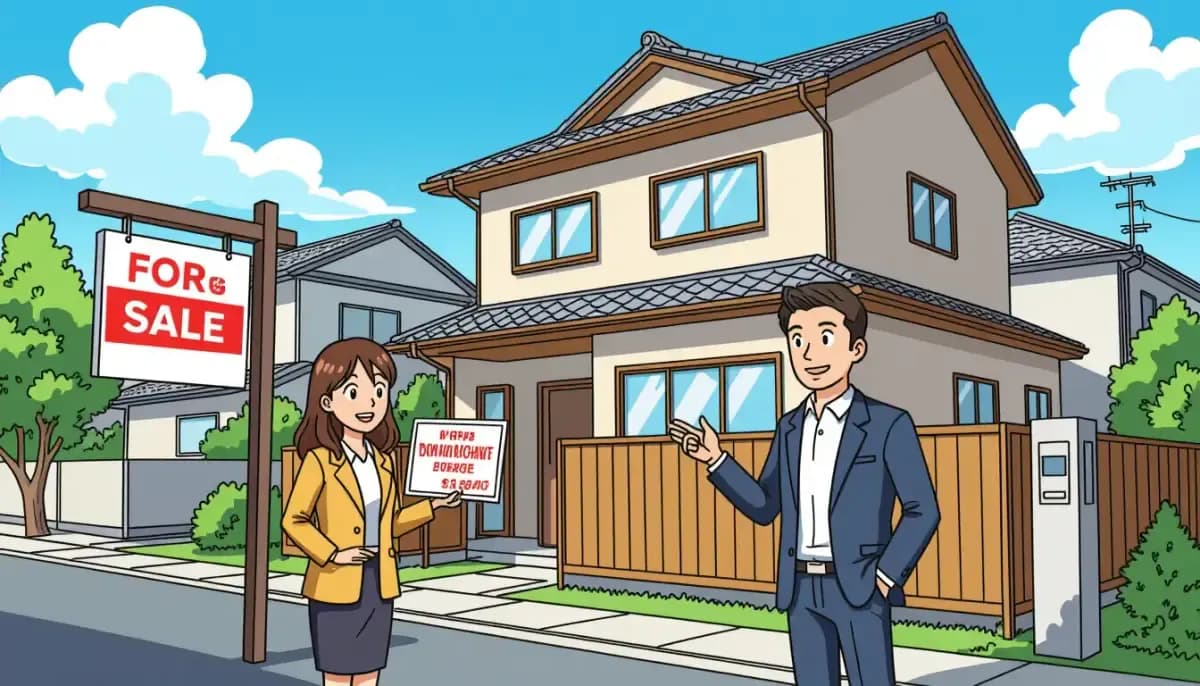
Avoid costly errors when selling property in Japan as a foreigner. Learn about withholding tax traps, capital gains planning, required documents, agent selection, and more in this complete guide.
Common Mistakes When Selling Property in Japan to Avoid
Selling property in Japan as a foreigner can be a rewarding but complex process. Many foreign sellers make costly errors that delay their sale, trigger unexpected tax bills, or result in losing thousands of dollars. Whether you bought a Tokyo apartment as an investment or inherited a rural akiya, understanding the pitfalls before you list your property is essential. This guide covers the most common mistakes when selling property in Japan and how to avoid them.
Mistake 1: Ignoring the Withholding Tax Rule for Non-Residents
One of the most financially shocking surprises for foreign sellers is the 10.21% withholding tax that applies to non-resident sellers. If you no longer live in Japan at the time of the sale, you are classified as a non-resident, and the buyer is legally required to withhold 10.21% of the entire purchase price and remit it to the tax office.
This means if you sell your property for ¥30,000,000, you will only receive approximately ¥26,937,000 at closing — not the full amount you expected.
How to avoid this mistake:
- Clarify your residency status before listing your property
- Appoint a Japanese Tax Agent (a resident of Japan) who can file your final tax return on your behalf between February 16 and March 15
- Notify the local tax office by submitting a "Notification of Tax Agent" form
- Understand that over-withheld amounts can be recovered through the annual tax return process
There is one important exception: if the property is being purchased for the personal residential use of the buyer or qualifying relatives, AND the sale price is under ¥100,000,000 (calculated per co-owner's share), withholding tax may not apply. However, even if your base sale price is under ¥100,000,000, including settlement amounts like fixed property tax adjustments may push the total over the threshold — so always verify with a tax professional.
For detailed guidance on Japan's tax obligations, PLAZA HOMES provides bilingual support for foreign sellers.
Mistake 2: Miscalculating Capital Gains Tax Based on Ownership Period
Japan's capital gains tax on real estate is heavily influenced by how long you have owned the property. Many foreign sellers fail to plan around this crucial rule.
| Ownership Duration | Tax Rate | Notes |
|---|---|---|
| 5 years or less (short-term) | 39.63% total | 30% income tax + 9% resident tax + surcharge |
| More than 5 years (long-term) | 20.315% total | 15% income tax + 5% resident tax + surcharge |
| Primary residence exemption | Up to ¥30M deducted | Must have lived in property as main home |
| 10+ year ownership of primary home | Reduced rate of 14.21% | On gains up to ¥60M |
The difference between short-term and long-term rates is enormous — nearly 20 percentage points. If you sell just a few months before crossing the 5-year threshold, you could pay almost double the tax.
How to avoid this mistake:
- Count the ownership period carefully; Japan counts from January 1 of the year of purchase to January 1 of the year of sale
- If you are close to the 5-year mark, consider waiting — the tax savings can be significant
- Consult a licensed tax accountant (zeirishi) experienced in real estate transactions
For comprehensive capital gains calculations, see Tokyo Portfolio's guide to capital gains tax in Japan.
Mistake 3: Failing to Prepare the Right Documents in Advance
Japan's property sale process requires specific documentation, and for foreign sellers, the requirements are more complex than for Japanese nationals. Many sellers underestimate how long it takes to gather the required paperwork, causing delays that push back closing dates by weeks or even months.
Required documents for foreign sellers include:
- Registered seal (jitsuin) and an original copy of the seal registration certificate
- Certified affidavits from a notary public or embassy/consular section verifying your signature and address (required for non-residents)
- Proof of address history if your registered address differs from your current address
- Property registration documents (touki boshohon) showing current ownership status
- Building inspection certificates and construction confirmation documents
- Foreign identification documents — if you purchased before July 8, 2012, you may need an alien registration card from the Immigration Services Agency rather than a standard residency certificate
How to avoid this mistake:
- Start gathering documents at least 60-90 days before your planned listing date
- Non-residents should obtain notarized affidavits from their country's Japanese consulate or a local notary public before traveling to Japan
- Work with a real estate company experienced in foreigner transactions that can guide you through the exact documentation requirements
For more on property ownership rights and documentation in Japan, see our guide to foreigner property ownership rights in Japan.
Mistake 4: Choosing the Wrong Real Estate Agent
Not all Japanese real estate agents are equipped to handle foreign seller transactions. Many agents have limited English language skills, no experience with international wire transfers, and little knowledge of the special tax requirements for non-residents. Choosing the wrong agent can lead to miscommunication, pricing errors, and legal complications.
Common agent-related mistakes:
- Choosing an agent based on speed rather than expertise — agents who promise quick sales may undervalue your property
- Not checking for bilingual capabilities — critical contract terms can be lost in translation
- Dual agency traps — in Japan, it is common for one agent to represent both buyer and seller (dual agency), earning commission from both sides. This creates a conflict of interest that may not serve your best interests
- Neglecting to compare commission rates — Japan's regulated commission structure allows agents to charge up to 3% of the sale price + ¥60,000 + tax, but you can negotiate
How to avoid this mistake:
- Choose an agency with demonstrated experience serving foreign clients
- Ask about their experience handling non-resident seller transactions specifically
- Consider firms with English-language contracts and bilingual staff
- Review our guide on how to find a real estate agent in Japan as a foreigner for a detailed selection process
For information on commission rates, see our article on real estate agent commission in Japan explained.
Mistake 5: Underestimating Selling Costs Beyond Agent Commission
Many sellers focus only on the purchase price and agent commission, forgetting about the numerous additional costs that can significantly reduce net proceeds. In Japan, selling costs can easily run to several hundred thousand or even millions of yen beyond the standard commission.
Additional selling costs to budget for:
- Demolition fees: If selling land with an older structure, demolition costs typically range from ¥1,000,000 to ¥3,000,000
- House cleaning and staging: Professional cleaning fees typically run ¥50,000–¥200,000
- Land survey fees: Required when selling land or detached houses; costs vary from ¥200,000–¥500,000
- Judicial scrivener (shiho shoshi) fees: Required for property registration transfer; typically ¥50,000–¥150,000
- Stamp duty (inshi): Required on the sale contract; ranges from ¥1,000 to ¥60,000 depending on contract value
- Income tax and resident tax on capital gains: As detailed above
- Moving and waste disposal costs: Can range from ¥50,000 to ¥300,000+
How to avoid this mistake:
- Request an itemized breakdown of all expected costs from your agent before signing a listing agreement
- Factor in tax liabilities when calculating your net proceeds
- Budget for at least 5–10% of the sale price in total selling costs
For a full overview of property taxes, see our guide on fixed asset tax in Japan explained for foreign property owners.
Mistake 6: Mispricing the Property
Foreign sellers often have unrealistic price expectations — either too high because of emotional attachment or original purchase price anchoring, or too low because they lack access to current local market data. Both mistakes are costly.
Overpricing results in the property sitting on the market for months, during which Japan's aging housing stock may depreciate further, and carrying costs (property tax, management fees) continue to accumulate.
Underpricing means leaving significant money on the table — particularly relevant in hot urban markets like Tokyo, Osaka, and Fukuoka where foreign demand has driven prices higher in recent years.
How to avoid this mistake:
- Request a comparative market analysis (CMA) from at least 2–3 different agents before setting a price
- Understand that about 76% of Japanese homes sell within 6 months, with roughly 20% selling within the first 2–3 months if priced correctly
- Review current market trends — see our Japan housing market forecast for up-to-date conditions
- Consider professional appraisal (fudosan kantei) for higher-value properties
For broader market context relevant to foreign buyers and sellers, resources like Living in Nihon and For Work in Japan cover expat perspectives on Japan's property landscape.
Mistake 7: Not Understanding the Property Registration System
Japan's property registration system (touki seido) is a public record that establishes legal ownership. Many foreign sellers fail to verify the current registration status of their property before listing, which can reveal unexpected encumbrances — outstanding mortgages, liens, or ownership disputes — that must be resolved before sale.
Common registration-related problems:
- Uncleared mortgages: The mortgage must be paid off and released from the registry before transfer of ownership can occur
- Deceased co-owner situations: If property is jointly owned and a co-owner has passed away, inheritance procedures must be completed before the property can be sold
- Incorrect address registration: If your registered address on the title does not match your current address or seal registration, corrections must be made — a process that can take weeks for non-residents
- Building registration discrepancies: The building registered may not match the actual structure if renovations were done without proper notification
How to avoid this mistake:
- Obtain a current certified copy of the property register (touki boshohon) early in the selling process
- Resolve any outstanding liens or mortgages before listing
- Work with a judicial scrivener (shiho shoshi) to handle the title transfer correctly
See our detailed guide on Japan's property registration system (touki seido) explained for a comprehensive overview.
Timing Your Sale: A Summary Checklist
Before listing your property in Japan, run through this checklist to avoid the most common mistakes:
| Checklist Item | Why It Matters |
|---|---|
| Confirm your residency status | Determines withholding tax obligations |
| Calculate ownership period | Critical for capital gains tax rate |
| Gather all required documents | Prevents closing delays |
| Appoint a Tax Agent (non-residents) | Required for tax filing |
| Get 2-3 agent valuations | Ensures accurate pricing |
| Obtain current property register | Reveals any encumbrances |
| Budget for all selling costs | Avoids financial surprises |
| Choose an agent experienced with foreigners | Ensures smooth transaction |
Final Thoughts
Selling property in Japan as a foreigner is entirely achievable — but only if you approach it with the right preparation. The biggest mistakes all stem from the same root cause: underestimating Japan's unique regulatory environment and assuming the process works the same as in your home country. By understanding the withholding tax rules, planning around capital gains timelines, working with experienced professionals, and gathering documents well in advance, you can sell your Japanese property efficiently and maximize your proceeds.
For additional resources on navigating Japan's real estate market as a foreigner, visit Gaijin Buy House for investor-focused guidance, and E-Housing's complete guide to selling property in Japan for up-to-date commission rates and timelines.
If you are still in the buying phase or considering your options, our complete guide to buying property in Japan as a foreigner provides a strong foundation for understanding Japan's real estate market from both sides of the transaction.

Originally from Vietnam, living in Japan for 16+ years. Graduated from Nagoya University, with 11 years of professional experience at Japanese and international companies. Sharing information about buying property in Japan for foreigners.
View Profile →Related Articles

Japan Property Market Conditions and Selling Strategies
Comprehensive guide to Japan property market conditions in 2025 and selling strategies for foreign owners. Covers Tokyo prices, tax implications, remote selling, and marketing channels.
Read more →
Selling Japan Property to Another Foreigner: What to Know
Learn how to sell Japan property to another foreigner: capital gains tax rates, required documents for non-residents, agent commissions, and how to sell from overseas with power of attorney.
Read more →
Japan Property Sale Closing and Settlement Process
A complete guide to the Japan property sale closing and settlement process, including the judicial scrivener role, closing costs, capital gains tax, and special steps for foreign buyers and sellers.
Read more →
Tax Deductions and Exemptions When Selling Property in Japan
Complete guide to tax deductions and exemptions when selling property in Japan. Learn about the ¥30 million primary residence deduction, capital gains tax rates, non-resident withholding rules, and how to maximize your savings as a foreign seller.
Read more →
Japan Property Sale Contract (Baibai Keiyaku) Explained
Learn everything about Japan's Baibai Keiyaku property sale contract: what it covers, the tetsukekin deposit rules, key clauses, the Jūyō Jikō Setsumei process, and special rules for foreign buyers and sellers.
Read more →
Selling Japan Property from Overseas: Remote Seller Guide
Complete guide to selling Japanese property remotely from overseas. Learn about Power of Attorney, required documents, capital gains tax rates, withholding tax, timelines, and how to transfer proceeds abroad as a non-resident foreign seller.
Read more →